Kingdom of Leinster
Videos
The Kingdom of Leinster was a kingdom of Gaelic Ireland which existed in the east of the island from the Irish Iron Age until the 17th century Early Modern Ireland. According to traditional Irish hist
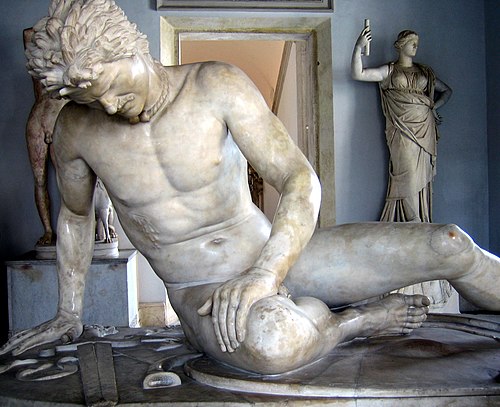
The Dying Gaul. According to Irish tradition, the name Leinster derives from the spears carried by the Gaul mercenaries brought back by the exile Labhraidh Loingseach to secure his kingdom.

St. Brigid of Kildare, carried by two angels, painted by John Duncan. She was invoked as protectoress of Leinster and control of Kildare was essential for the Kings of Leinster.

Art Óg Mac Murchadha Caomhánach, King of Leinster in the late 14th century revived the fortunes of the kingdom and clashed with Richard II Plantagenet, King of England.

Glendalough Monastery founded by Kevin of Glendalough, a prince of royal Leinster blood. Located in a valley in the Wicklow Mountains, the monastery was founded in the 6th century.
Ferns, County Wexford
Videos
Ferns is a historic town in north County Wexford, Ireland. It is 11 km north of Enniscorthy. The remains of Ferns Castle are in the centre of the town. The town is in a civil parish of the same name.
Kingdom of Leinster
…leaders of the Laigin provided many kings of Leinster. A map of Leinster in the 10th century, with boundaries accounting for the loss of Osraige. Capital Ferns Naas, Mullaghmast & Lyons (rotational) Dún Ailinne (ancient) Common languages Primitive Irish, Old Irish, Middle Irish, Latin Religion Gaelic Christianity…

Ferns aerial 2026 04 18 02

Ferns Abbey aerial 2026 04 18 01

Ferns Cathedral 2009 09 28

Ferns Church 2026 04 18 06