Kirtley F. Mather
Videos
Photos
Kirtley Fletcher Mather was an American geologist and faculty member at Harvard University. An expert on petroleum geology and mineralogy, Mather was a prominent scholar, advocate for academic freedom, social activist, and critic of McCarthyism. He is known for his efforts to harmonize the dialogue between science and religion, his role in the Scopes "Monkey Trial", his faith-based liberal activism, support for adult education programs and advocacy for civil liberties.

Kirtley F. Mather

American Association for the Advancement of Science officers and senior officials in 1947. Left to right, standing: Edmund Ware Sinnott, George Alfred Baitsell, Fernandus Payne, Karl Lark-Horovitz, Walter Richard Miles, Elvin Charles Stakman, sitting: Anton Julius Carlson, Kirtley Fletcher Mather, Forest Ray Moulton, Harlow Shapley.

Mather with Cornell President Edmund Ezra Day in 1947
Scopes trial
Videos
Photos
The Scopes trial, formally The State of Tennessee v. John Thomas Scopes, and commonly referred to as the Scopes Monkey Trial, was an American legal case from July 10 to July 21, 1925, in which a high school teacher, John T. Scopes, was accused of violating Tennessee's Butler Act, which had made it illegal for teachers to teach human evolution in any state-funded school. The trial was deliberately staged in order to attract publicity to the small town of Dayton, Tennessee, where it was held. Scopes was unsure whether he had ever actually taught evolution, but he incriminated himself deliberately so the case could have a defendant.

On the trial's seventh day, proceedings were moved outdoors because of excessive heat. William Jennings Bryan (seated, left) is being questioned by Clarence Darrow.

John Scopes

Clarence Darrow in 1925, during the trial
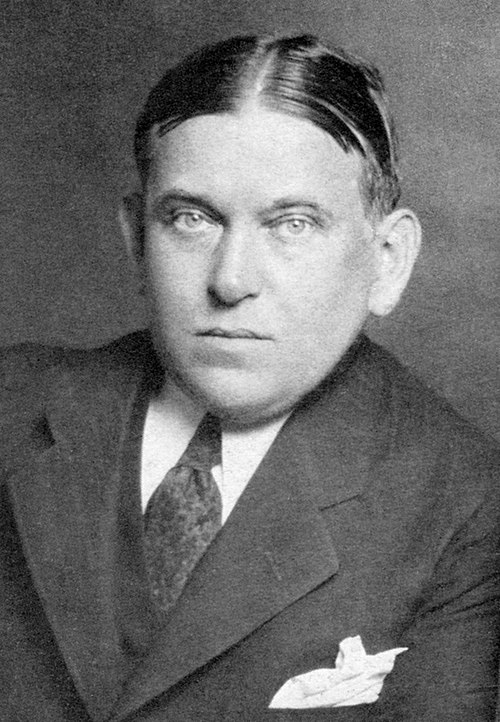
H. L. Mencken in 1928