Knyaz
Videos
A knyaz, also knez, knjaz, kniaź or kniaz, is a historical Slavic title, used both as a royal and noble title in different times. It is usually translated into English as 'prince', 'king' or 'duke', d
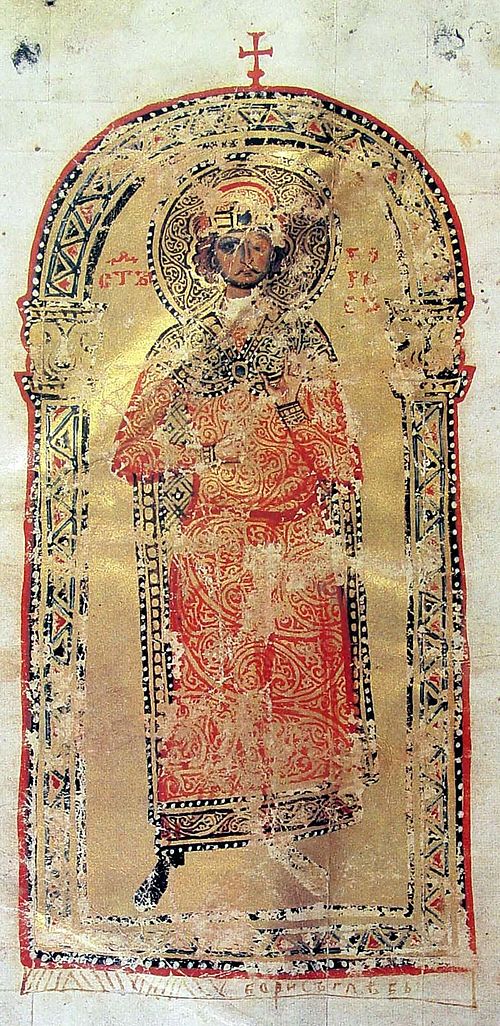
Until Boris I (852–889), the title of the Bulgarian monarchs was knyaz (Кнѣзъ). His son, Simeon I (893–927), adopted the title tsar (emperor), which became the title of the subsequent Bulgarian rulers.

The title knez appeared in the early 12th-century Glagolitic Baška tablet inscription, found on the island of Krk, Croatia.

Kneaze Alexey Michailovitz, 1664 (Tsar Alexis I of Russia)

Бой скифов со славянами
Tsar
Videos
Tsar is a Slavic title derived from the Latin word caesar, which was intended to mean "emperor" in the European medieval sense of the term—a ruler with the same rank as a Roman emperor, holding it by
Knyaz
…predecessors. The new titles were applied to his sons Vladimir Rasate (889-893) and Simeon I (893–927), however knyaz Simeon took the higher title of tsar soon in 913. According to Florin Curta, the primary sources have a variety of names for the rulers of the Bulgars before christianisation - such as…

Simeon I of Bulgaria, the first Bulgarian tsar and the first person who bore the title "tsar", by Alphonse Mucha

Reception of the Tsar of Russia in the Moscow Kremlin, by Ivan Makarov

Crowning of Stefan Dušan, Emperor of the Serbs, as tsar, by Paja Jovanović

Mostich's epitaph uses the title tsar (outlined): "Here lies Mostich who was ichirgu-boil during the reigns of Tsar Simeon and Tsar Peter. At the age of eighty he forsook the rank of ichirgu boila and all of his possessions and became a monk. And so ended his life." (Museum of Preslav)