Koban (coin)
Videos
The koban was a Japanese oval gold coin, cast on the order of Tokugawa Ieyasu in Edo period feudal Japan and a part of Tokugawa coinage.
Koban


Size evolution of the Koban during the Tokugawa period. From left to right: Keichō koban (1601-1695), Genroku koban (1695-1710), Hōei koban (1710-1714), Shōtoku koban (1714), Kyōhō koban (1714-1736), Genbun koban (1736-1818), Bunsei koban (1819-1828), Tenpō koban (1837-1858), Ansei koban (1859), Man'en koban (1860-1867).
Maneki-neko
Videos
The maneki-neko is a common Japanese figurine which is often believed to bring good luck to the owner. In modern times, they are usually made of ceramic or plastic. The figurine depicts a cat, traditi
Koban (coin)
…Restoration in 1868 a new series of coins was ordered based on European currency systems and the koban was discontinued. Koban are commonly seen on maneki-neko figurines. Meowth, a maneki-neko-inspired creature in the Pokémon series, has a koban on its forehead. Ōban…
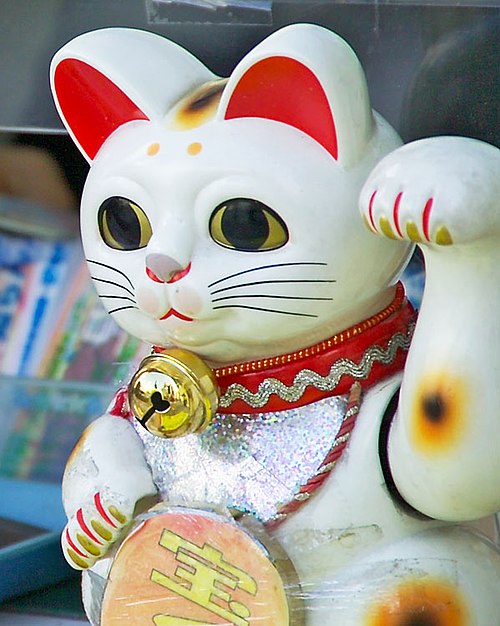
Maneki-neko with motorized arm beckons customers to buy lottery tickets in Tokyo, Japan

Maneki-neko in a shop, Japan

A wooden mold for a maneki-neko and Okiagari-Koboshi Daruma doll from the Edo period, 18th century. Brooklyn Museum.

"Joruri-machi Hanka no zu" by Utagawa Hiroshige, 1852