Kursk submarine disaster
Videos
The Russian nuclear submarine K-141 Kursk sank in an accident on 12 August 2000 in the Barents Sea, with the death of all 118 personnel on board. The submarine, which was of the Project 949A-class, wa

Wreck of Kursk in a floating dock at Roslyakovo, 2002.

The British deep submersible rescue vehicle LR5

President Putin in a contentious meeting with relatives of the dead sailors in Vidyayevo, during which the families complained about the Russian Navy's response to the disaster

Giant 4 in background
Barents Sea
Videos
The Barents Sea is a marginal sea of the Arctic Ocean, located off the northern coasts of Norway and Russia and divided between Norwegian and Russian territorial waters. It was known earlier among Rus
Kursk submarine disaster
…The Russian nuclear submarine K-141 Kursk sank in an accident on 12 August 2000 in the Barents Sea, with the death of all 118 personnel on board. The submarine, which was of the Project 949A-class (Oscar II class), was taking part in the first major…
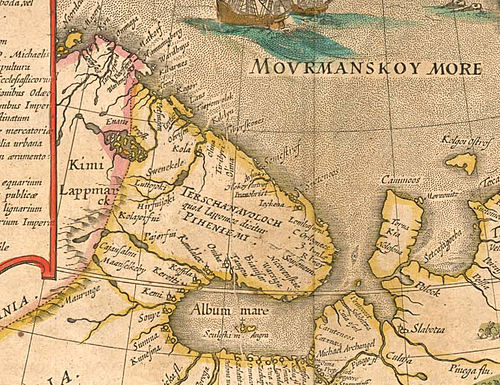
Shores of the Barents (Murman) Sea. From "Tabula Russiae", Joan Blaeu's, Amsterdam, 1614.

Phytoplankton bloom in the Barents Sea. The milky-blue colour that dominates the bloom suggests that it contains large numbers of coccolithophores.

Fragmented sea ice within the Barents Sea marginal ice zone southeast of Svalbard, 5 May 2016
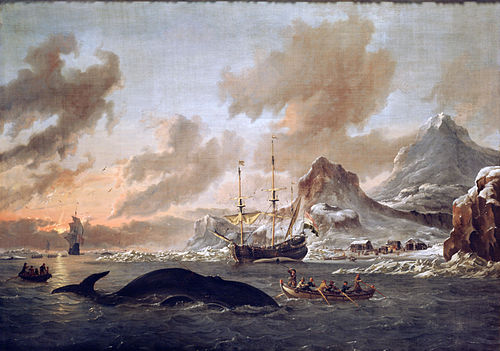
Dutch whalers near Svalbard, 1690