Lê dynasty
Videos
The Lê dynasty, also known in historiography as the Later Lê dynasty, was the longest-ruling Vietnamese dynasty, having ruled Đại Việt from 1428 to 1789 with an interregnum between 1527 and 1533. The
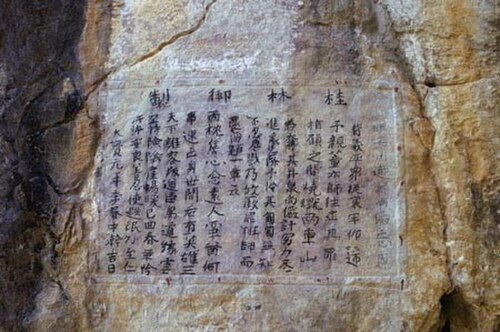
Quế Lâm Ngự Chế, carved texts by Emperor Lê Thái Tông commemorating a campaign against rebels in Sơn La, 1440.

Administrative division of Lê dynasty and number of armed forces stationed in each regions in 1471

Imperial seal of the Lê dynasty, 1479 version.

Mông Đồng illustration, warship of Lê dynasty
Vietnam
Videos
Vietnam, officially the Socialist Republic of Viet Nam, is a country at the eastern edge of Mainland Southeast Asia. With an area of about 331,000 square kilometres and a population of over 102 millio
Lê dynasty
…followers of Lê Chiêu Thống who were imprisoned in China to go back to Vietnam. Lê Chiêu Thống's remains are buried in Bàn Thạch village, Thanh Hóa, Vietnam. He was posthumously given the title Mẫn Đế (愍帝). Modern descendants of the Lê dynasty live in southern Vietnam. After ending the Fourth Chinese…

Capture of Saigon by Charles Rigault de Genouilly on 18 February 1859

The Grand Palais built for the 1902–1903 world's fair, when Hanoi became French Indochina's capital

First Nationwide Congress of Emulation Fighters, Democratic Republic of Vietnam, 1952

Three US Fairchild UC-123B aircraft spraying Agent Orange during the Operation Ranch Hand as part of a herbicidal warfare operation depriving the food and vegetation cover of the Việt Cộng, c. 1962–1971