LORAN
Videos
LORAN was a hyperbolic radio navigation system developed in the United States during World War II. It was similar to the UK's Gee system, but operated at lower frequencies in order to provide an impro

The AN/APN-4 was an airborne LORAN receiver used into the 1960s. It was built in two parts to match the UK's Gee system, and could be swapped with Gee in a few minutes.
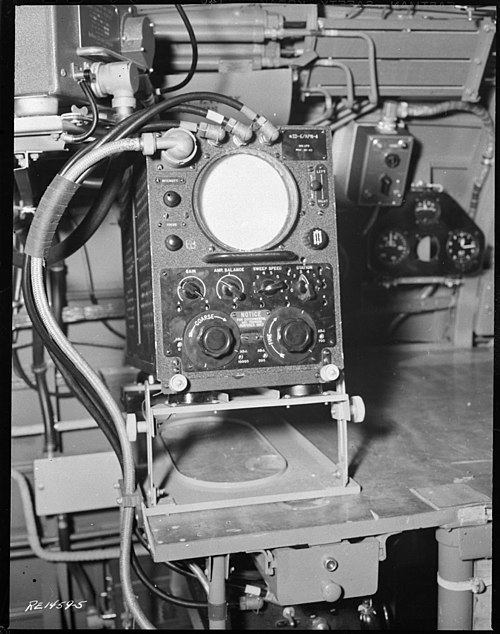
AN/APN-4 LORAN in RCAF Canso (PBY) aircraft
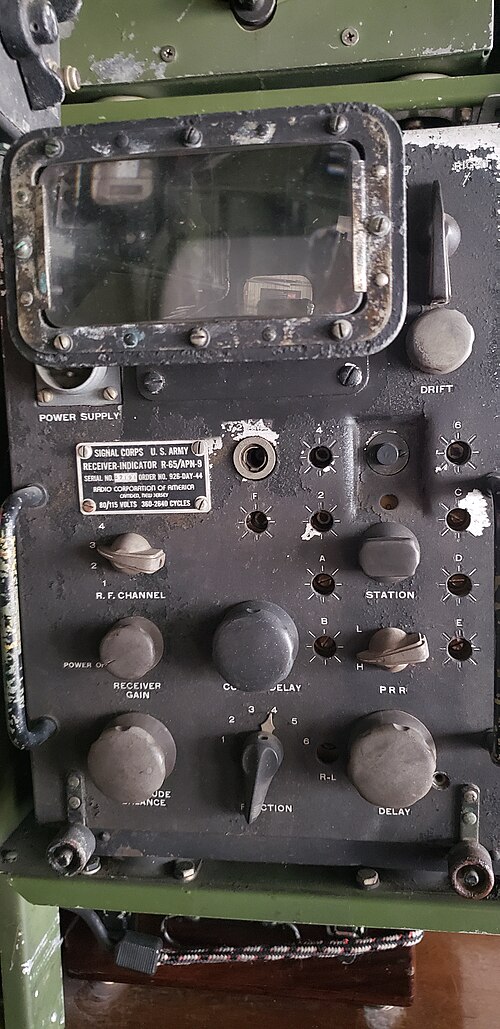
R-65/APN-9 in a B-17G aircraft

The signal from a single LORAN transmitter will be received several times from several directions. This image shows the weak groundwave arriving first, then signals after one and two hops off the ionosphere's E layer, and finally one and two hops off the F layer. Operator skill was needed to tell these apart.
Radio navigation
Videos
Radio navigation or radionavigation is the application of radio waves to determine a position of an object on the Earth, either the vessel or an obstruction. Like radiolocation, it is a type of radiod
LORAN
…LORAN (Long Range Navigation) was a hyperbolic radio navigation system developed in the United States during World War II. It was similar to the UK's Gee system, but operated at lower frequencies in order to provide…

Amelia Earhart's Lockheed Electra had a prominent RDF loop on the cockpit roof.

The Orfordness Beacon as it appears today.

VOR transmitter station

Cessna 182 with GPS-based "glass cockpit" avionics