Lady Jane Grey
Videos
Lady Jane Grey, also known as Lady Jane Dudley after her marriage, and nicknamed the "Nine Days Queen", was an English noblewoman who was proclaimed Queen of England and Ireland on 10 July 1553 and re


17th-century portrait of a lady in the collection of Audley End House, labelled as Jane Grey, copy of the original at Syon House. Based on a portrait type identified as Lady Katherine Grey or Elizabeth I, it is believed that the Syon Portrait was created by William Seymour, 2nd Duke of Somerset, with the help of his grandfather, Lady Katherine Grey's widower, who had also known Jane Grey, tweaking the portrait type into a genuine resemblance of her.
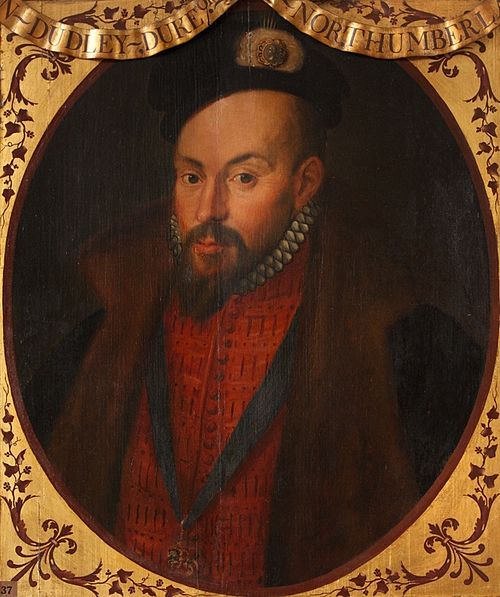
John Dudley, 1st Duke of Northumberland, Jane's father-in-law and strongman, led much of his daughter-in-law's brief reign.

Edward VI's "devise for the Succession". The draft will was the basis for letters patent, which declared Jane Grey successor to the Crown. Edward's autograph shows his alteration of his text, from "L Janes heires masles" to "L Jane and her heires masles". Inner Temple Library, London.
Mary I
Videos
Mary I was Queen of England and Ireland from July 1553 and Queen of Spain as the wife of King Philip II from January 1556 until her death in 1558. She made vigorous attempts to reverse the English Ref
Lady Jane Grey
…proclaimed Queen of England and Ireland on 10 July 1553 and reigned until she was deposed by the Privy Council of England, which proclaimed her cousin, Mary I, as the new Queen on 19 July. Jane was later beheaded for high treason. Jane was the great-granddaughter of Henry VII (through his youngest surviving…


Mary in 1522, at the time of her engagement to Emperor Charles V. She is aged 6 and wears a rectangular brooch inscribed "The Emperour".
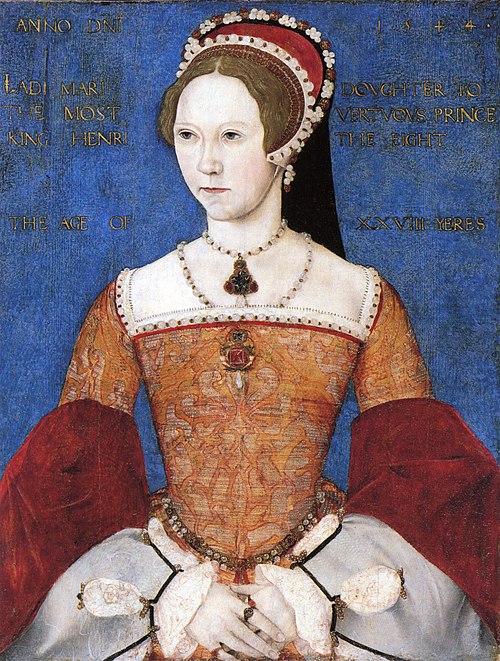
Mary in 1544

1545 painting showing left to right: 'Mother Jak', Mary, Edward, Henry VIII, Jane Seymour (posthumous), Elizabeth, Will Somers (court fool)