The entire wiki reimagined as a visual magazine with video discovery · Watch your interests come alive
Laguna De Guatavita
Laguna De Guatavita
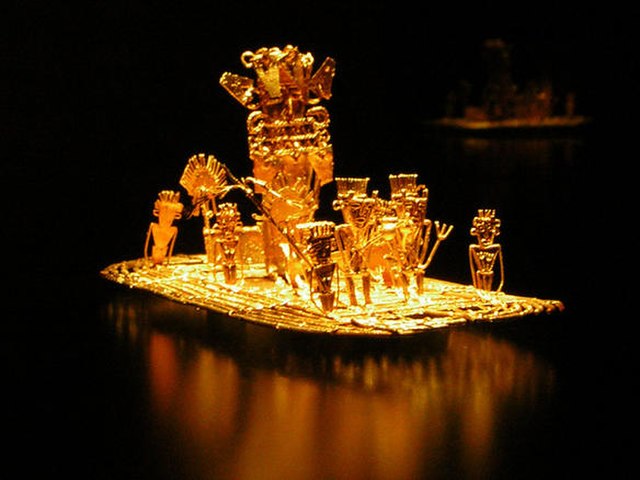
The zipa used to cover his body in gold dust, and from his raft, he offered treasures to the Guatavita goddess in the middle of the sacred lake. This
The zipa used to cover his body in gold dust, and from his raft, he offered treasures to the Guatavita goddess in the middle of the sacred lake. This Muisca tradition became the origin of the legend of El Dorado. Muisca raft in the Gold Museum, Bogotá, Colombia
Votive objects found at the bottom of Lake Guatavita. British Museum
Muisca
Muisca raft (1200–1500 CE) representation of the initiation of the new zipa at the lake of Guatavita
View of the Eastern Ranges of the Andean natural region Lake Tota is clearly visible
Petroglyphs of El Abra (~11,000 BCE)
A Muiscan ceramic figure, 600–1600 AD