Lamashtu
Videos
In Mesopotamian mythology, Lamashtu, the daughter of the sky god Anu, is a demonic Mesopotamian deity that spread disease and was widely blamed as the cause of miscarriages and cot deaths.

Lamashtu plaque held by Pazuzu

Close-up of plaque's top register

Close-up of plaque's bottom register

Lamashtu plaque
Anu
Videos
Anu or Anum, originally An, was the divine personification of the sky, king of the gods, and ancestor of many of the deities in ancient Mesopotamian religion. He was regarded as a source of both divin
Lamashtu
…In Mesopotamian mythology, Lamashtu (𒀭𒈕𒈨; Akkadian dLa-maš-tu; Sumerian Dimme dDim3-me or Kamadme), the daughter of the sky god Anu, is a demonic Mesopotamian deity that spread disease and was widely blamed as the cause of miscarriages and cot deaths. Although Lamashtu has traditionally…

Symbols of various deities, including Anu (rightmost, second row) on a kudurru of Ritti-Marduk, from Sippar, Iraq, 1125–1104 BCE
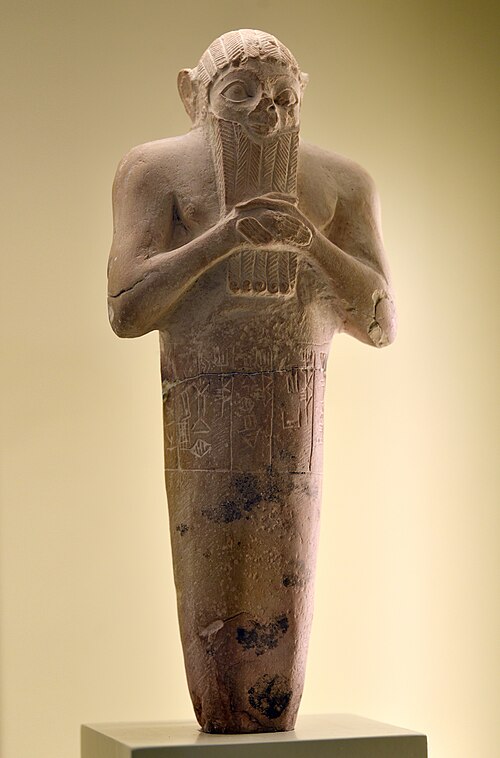
A foundation figurine of king Lugal-kisalsi. The inscription mentions Nammu and Anu as wife and husband.

Part of the front of a Babylonian temple to Ishtar in Uruk, built c. 1415 BCE, during the Kassite Period (c. 1600—1155 BCE). It has been argued in the past that it was first dedicated to Anu, and only later to Inanna, but this view is no longer regarded as plausible.
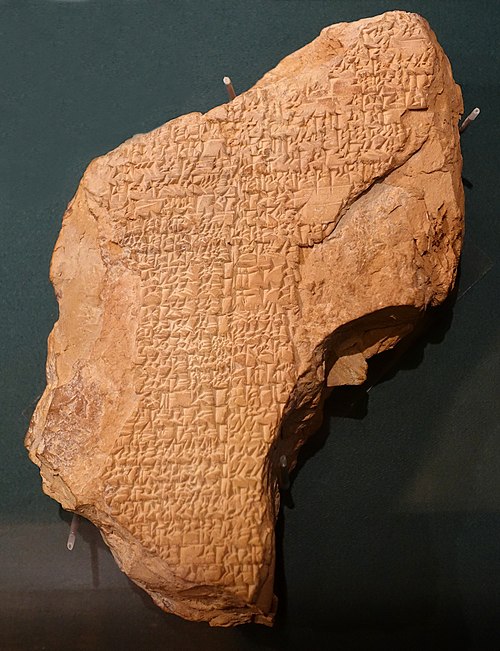
The original Sumerian clay tablet of Inanna and Ebiḫ, which is currently housed in the Oriental Institute at the University of Chicago