Lancaster raid
Videos
Photos
The Lancaster Raid was the first in a series of five planned raids on English colonial towns during the winter of 1675-1676 as part of King Philip's War. Metacom, known by English colonists as King Philip, was a Wampanoag sachem who led and organized Wampanoag warriors during the war. Teaming up with Nipmuc and Narragansett warriors, the Wampanoag successfully raided the town of Lancaster, securing provisions and prisoners to help them carry on into their winter offensive.

Lancaster raid site on Main Street in Lancaster

Being taken captive during a raid

Lancaster raid site on Main Street in Lancaster
King Philip's War
Videos
Photos
King Philip's War was an armed conflict in 1675–1676 between a group of indigenous peoples of the Northeastern Woodlands, the English New England Colonies and their indigenous allies. The war is named for Metacom, the Pokanoket chief and sachem of the Wampanoag who adopted the English name Philip because of the friendly relations between his father Massasoit and the Plymouth Colony. The war continued in the most northern reaches of New England until the signing of the Treaty of Casco Bay on April 12, 1678.

"King Philip's Seat," a meeting place on Mount Hope in Bristol, Rhode Island.

Site of "Nine Men's Misery" in Cumberland, Rhode Island, where Captain Pierce's troops were tortured to death

Colonists defending their settlement (non-contemporary depiction)
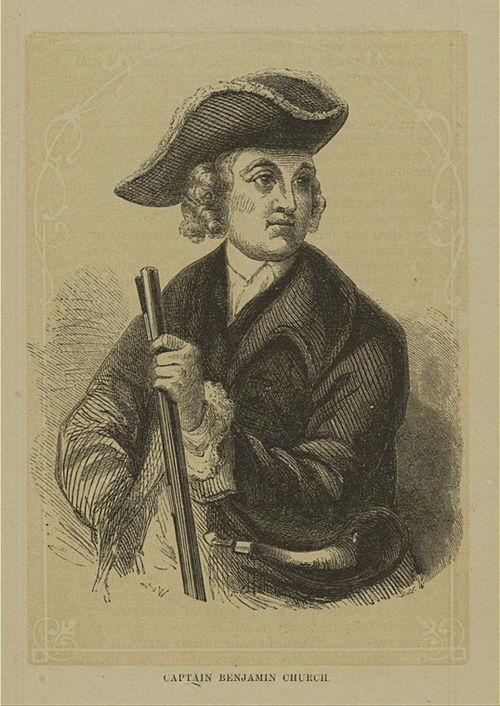
Benjamin Church: Father of American Rangers