Land reform in Mexico
Videos
Photos
Before the 1910 Mexican Revolution, most land in post-independence Mexico was owned by wealthy Mexicans and foreigners, with small holders and indigenous communities possessing little productive land. During the colonial era, the Spanish crown protected holdings of indigenous communities that were mostly engaged in subsistence agriculture to countervail the encomienda and repartimiento systems. In the 19th century, Mexican elites consolidated large landed estates (haciendas) in many parts of the country while small holders, many of whom were mixed-race mestizos, engaged with the commercial economy.

Hacienda de San Antonio Coapa and a train, by José María Velasco (1840—1912).

Gaspar Melchor de Jovellanos, 18th-century Spanish intellectual who formulated policies for agrarian reform.

Alexander von Humboldt, the inscription reads in translation "From the Mexican Nation to Alejandro de Humboldt - Merit from the country 1799-1999"
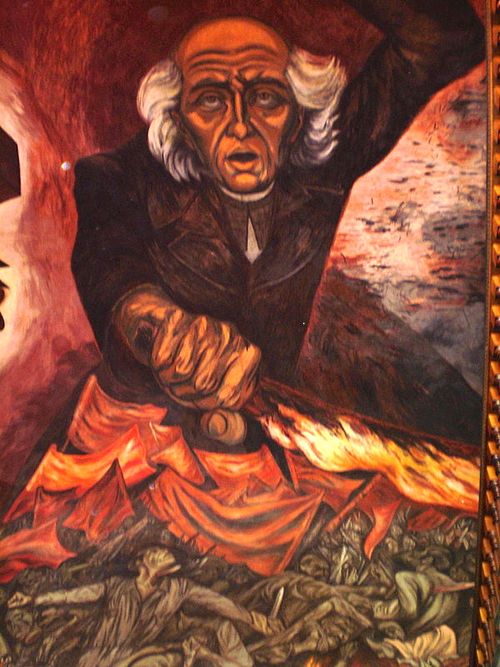
Miguel Hidalgo y Costilla, by José Clemente Orozco, Jalisco Governmental Palace, Guadalajara.
Mexican Revolution
Videos
Photos
The Mexican Revolution was an extended sequence of armed regional conflicts in Mexico from 20 November 1910 to 1 December 1920. It has been called "the defining event of modern Mexican history" and resulted in the destruction of the Federal Army, its replacement by a revolutionary army, and the transformation of Mexican culture and government. The northern Constitutionalist faction prevailed on the battlefield and drafted the present-day Constitution of Mexico, which aimed to create a strong central government. Revolutionary generals held power from 1920 to 1940. The revolutionary conflict was primarily a civil war, but foreign powers, having important economic and strategic interests in Mexico, figured in the outcome of Mexico's power struggles; the U.S. involvement was particularly high. The conflict led to the deaths of around one million people, mostly noncombatants.

From left to right and top to bottom: Huertista troops insurging against President Francisco Madero, Ten Tragic Days, 1913 Questionable photograph, may come from a 1930s film or be a period production Defense of the government by supporters of Madero, Ten Tragic Days, 1913, Mexico City El Niño artillero (Antonio Gómez Delgado), 10 years old, enlisted on July 2, 1910 in Acatzingán, Michoacán, part of the federal troops commanded by Victoriano Huerta

General Porfirio Díaz, President of Mexico

A banner (1903) at the office of opposition magazine El hijo del Ahuizote reads: "The Constitution has died..." (La Constitución ha muerto...)

Ricardo Flores Magón (left) and Enrique Flores Magón (right), leaders of the Mexican Liberal Party in jail in the Los Angeles (CA) County Jail, 1917