Lath
Videos
A lath or slat is a thin, narrow strip of straight-grained wood used under roof shingles or tiles, on lath and plaster walls and ceilings to hold plaster, and in lattice and trellis work.
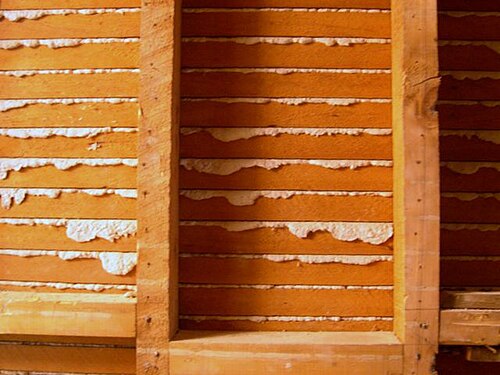
Sawn lath, seen from the back with hardened plaster from the other side showing through. Sawn lath became popular after the introduction of the circular saw in the 19th century.

Roof laths span across between the rafters and support the wood shingles.

Riven lath, each piece has been split from a log

Bostwick Steel Lath Company advertisement for steel truss loop type metal lath in 1920
Drywall
Videos
Drywall is a panel made of calcium sulfate dihydrate, with or without additives, typically extruded between thick sheets of facer and backer paper, used in the construction of interior walls and ceili
Lath
…includes metal wire mesh or expanded metal that is applied to a wood or metal framework as matrix over which stucco or plaster is applied, as well as drywall products called gypsum or rock lath. Historically, reed mat was also used as a lath material. One of the key elements of lath, whether wooden slats or…

Various sized cuts of 1⁄2 in (13 mm) drywall with tools for maintenance and installation

Vertically hung drywall with joint compound

Applying "joint compound" to drywall

Drywall water damage in a closet