Law of Singapore
Videos
The legal system of Singapore is based on the English common law system. Major areas of law – particularly administrative law, contract law, equity and trust law, property law and tort law – are largely judge-made, though certain aspects have now been modified to some extent by statutes. However, other areas of law, such as criminal law, company law and family law, are almost completely statutory in nature.


Sir Thomas Stamford Bingley Raffles (6 July 1781 – 5 July 1826)

The East India House, the headquarters of the East India Company, in Leadenhall Street, London, as seen c. 1817; it was demolished in 1869.

The title page of the Second Charter of Justice of 27 November 1826, from the edition published in London by J. L. Cox in February 1827. This copy of the Charter was originally owned by the Supreme Court of the Straits Settlements, and a photocopy of it is presently in the collection of the Library of the Supreme Court of Singapore.
The Internal Security Act 1960 (ISA) of Singapore is a statute that grants the executive power to enforce preventive detention, prevent subversion, suppress organized violence against persons and property, and do other things incidental to the internal security of Singapore. The present Act was originally enacted by the Parliament of Malaysia as the Internal Security Act 1960, and extended to Singapore on 16 September 1963 when Singapore was a state of the Federation of Malaysia.

Old Parliament House, photographed in January 2006
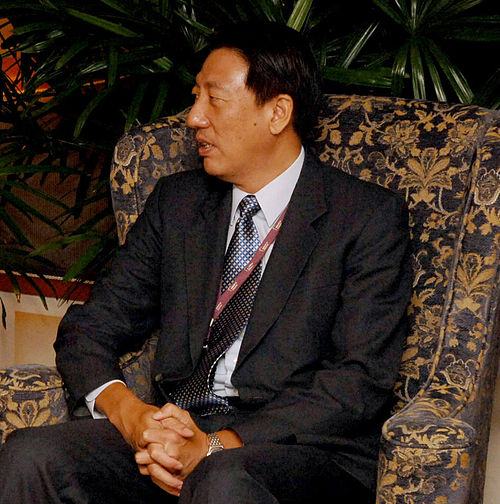
Teo Chee Hean, the Deputy Prime Minister, Coordinating Minister for National Security and Minister for Home Affairs in the 12th Parliament of Singapore, justified the Internal Security Act in Parliament in October 2011

Timeline of legal developments concerning the exercise of discretion under the ISA

Teo Soh Lung in 2011. Upon an appeal brought by her, the Court of Appeal held that the 1989 amendments to the Constitution and ISA had reimposed the subjective test for the exercise of discretion under the ISA.