Laws of Cricket
Videos
The Laws of Cricket is a code that specifies the rules of the game of cricket worldwide. The earliest known code was drafted in 1744. Since 1788, the code has been owned and maintained by the private

The boundary can be marked in several ways, such as with a rope.

A wicket can be put down by throwing the ball at it and thereby dislodging the bails.
Wicket
Videos
In the sport of cricket, the term wicket has several meanings:
Laws of Cricket
…of Cricket, for example: (a) a Ball caught, the Striker is out; (b) when a Ball is caught out, the Stroke counts nothing; (c) catching out behind the Wicket allowed. Points that differ from the modern Laws (use of italics is to highlight the differences only): (a) the wickets shall be pitched at twenty three…

A wicket
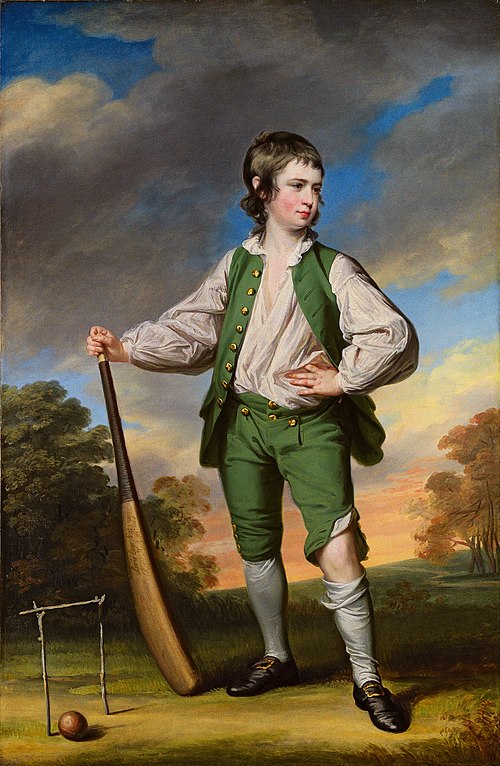
The Young Cricketer by Francis Cotes in 1768 features the original two-stump wicket

A ball from Bill O'Reilly hits the stumps but does not dislodge the bail, Sydney, 1932. The wicket was not put down, and so the batter (Herbert Sutcliffe) was not out.

A scoreboard showing the total runs scored and wickets lost