Leading-edge extension
Videos
A leading-edge extension is a small extension to an aircraft wing surface, forward of the leading edge. The primary reason for adding an extension is to improve the airflow at high angles of attack an

Leading-edge slats deployed on an Airbus A318-100

Dog tooth on the wing of a Hawker Hunter

Experimental drooped leading-edge cuff on an American Aviation AA-1 Yankee

Condensation vortex flows along the LERX of an F/A-18
The McDonnell Douglas F-4 Phantom II is an American tandem two-seat, twin-engine, all-weather, long-range supersonic jet interceptor and fighter-bomber that was developed by McDonnell Aircraft for the
Leading-edge extension
…lift and improving resistance to stall. Some of the best-known uses of the dogtooth are in the stabilizer of the F-15 Eagle and the wings of the F-4 Phantom II, F/A-18 Super Hornet, CF-105 Arrow, F-8 Crusader, and the Ilyushin Il-62. Where the dogtooth is added as an afterthought, as for example on the Hawker…

QF 4 Holloman AFB
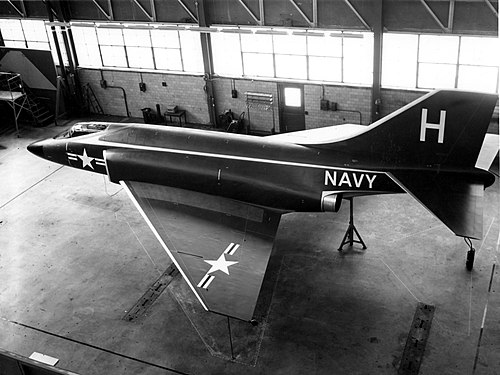
The McDonnell F3H-G/H mockup, 1954

Key figures in the F-4 development: David Lewis, Robert Little, and Herman Barkey

An F4H-1F aboard Independence, April 1960