Ledger art
Videos
Ledger art is narrative drawing or painting on paper or cloth, predominantly practiced by Plains Indians but also from the Indigenous peoples of the Plateau and Great Basin. Ledger art flourished prim

Kiowa ledger art drawing possibly depicting the Buffalo Wallow battle in 1874, a fight between Southern Plains Indians and the U.S. Army during the Red River War.

The Sand Creek massacre as drawn by eyewitness Howling Wolf (1874–1875).

Drawing by Black Hawk (Sans Arc Lakota), c. 1880 depicting a horned Thunder Being (Haokah) on a horse-like creature with eagle talons and buffalo horns. The creature's tail forms a rainbow that represents the entrance to the Spirit World, and the dots represent hail. Accompanying the picture on the page were the words: "Dream or vision of himself changed to a destroyer and riding a buffalo eagle."

Ledger drawing from the Bowstring Warrior Society Ledger, pencil, colored pencil, c. 1850s
David Pendleton Oakerhater
Videos
David Pendleton Oakerhater, also known as O-kuh-ha-tuh and Making Medicine, was a Cheyenne warrior and spiritual leader. He later became an artist and Episcopal deacon. In 1985, Oakerhater was the fir
Oakerhater in 1881

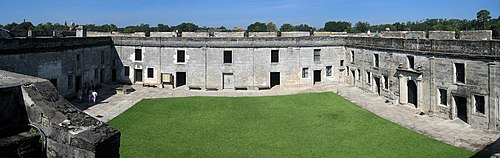
The courtyard at Fort Marion

Self-portrait with horse, ca. 1875

Oakerhater (right) as a missionary in Oklahoma