Leucism
Videos
Leucism or leukism, is a wide variety of conditions that result in partial loss of pigmentation in an animal—causing white, pale, or patchy coloration of the skin, hair, feathers, scales, or cuticles,

Leucistic white lions owe their colouring to a recessive allele. Note the eyes and lips remain the normal colour. Studies have shown that the reduced pigment comes from a mutation in the gene for tyrosinase, the same as causes Type I oculocutaneous albinism in humans.

This white horse owes its coloring to a dominant allele (dominant white).

A leucistic rock dove. Both the eyes and legs are still of the normal colour.

A leucistic house sparrow (Passer domesticus) in Kaycee, Wyoming, USA
Albinism
Videos
Albinism is the congenital absence of pigmentation in an animal or plant resulting in "hair being white, red, or yellow", "feathers, scales, and skin being yellow", "eyes being red, pink, purple, viol
Leucism
…cell-types differentiate from the same multipotent precursor cell-type, leucism can cause a reduction in all types of pigment. This is in contrast to albinism, for which leucism is often mistaken. Albinism results in the reduction of melanin production only, though the melanocyte (or melanophore) is still…

"Claude", an albino American alligator who lived at the California Academy of Sciences
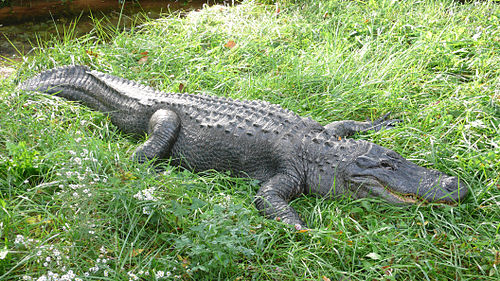
American alligator with normal pigmentation

Mice with Type I oculocutaneous albinism

Albino wallaby (OCA1a) with her offspring