Liberty (personification)
Videos
The concept of liberty has frequently been represented by personifications, often loosely shown as a female classical goddess. Examples include Marianne, the national personification of the French Rep
La liberté, Nanine Vallain, 1794


Statue of Liberty (Liberty Enlightening the World), 1886, New York, by Frédéric Auguste Bartholdi

Freedom Monument, 1928, Kaunas, Lithuania, by Juozas Zikaras

Freedom Monument, 1935, Riga, Latvia, by Kārlis Zāle
Marianne
Videos
Marianne has been the national personification of the French Republic since the French Revolution, as an emblem of liberty, equality, fraternity and reason, as well as a portrayal of the Goddess of Li
Liberty (personification)
…The concept of liberty has frequently been represented by personifications, often loosely shown as a female classical goddess. Examples include Marianne, the national personification of the French Republic and its values of Liberté, Égalité, Fraternité, and the female Liberty portrayed in artworks, on…
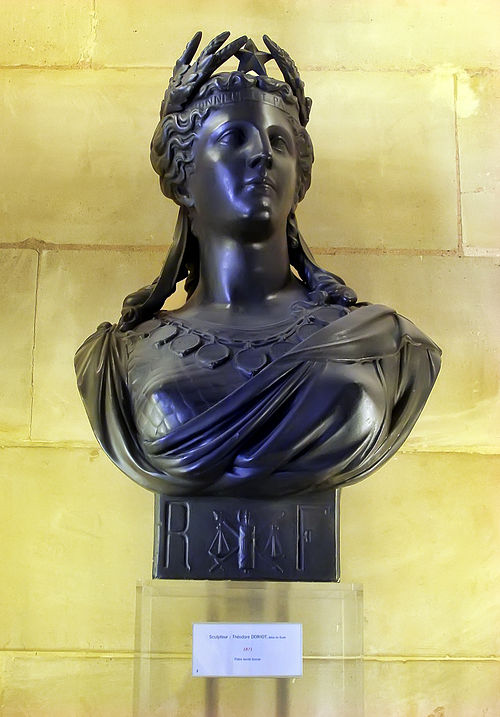
Bust of Marianne sculpted by Théodore Doriot, in the French Senate

Liberty Leading the People by Eugène Delacroix (1830), celebrates the July Revolution (Louvre Museum).

Marianne on a poster, the Year III of the Republic

"Freedom for France, freedoms for the French" Marianne (1940)