Libyan civil war (2011)
Videos
The Libyan Civil War, also known as the First Libyan Civil War and Libyan Revolution, was an armed conflict fought in 2011 in the North African country of Libya between forces loyal to Colonel Muammar

Libyan Civil War in October 2011

USS Barry launching a Tomahawk missile in support of Operation Odyssey Dawn

Confrontation between rebels and al Gaddafi in Al Bayda

Benghazi Anti Qaddafi protest
Muammar Gaddafi
Videos
Muammar Muhammad Abu Minyar al-Gaddafi was a Libyan military officer, revolutionary, politician, and political theorist who ruled Libya from 1969 until his overthrow by Libyan rebel forces in 2011 dur
Libyan civil war (2011)
…First Libyan Civil War and Libyan Revolution, was an armed conflict fought in 2011 in the North African country of Libya between forces loyal to Colonel Muammar Gaddafi and rebel groups attempting to oust his government. The war was ignited by protests in Benghazi beginning on 15 February 2011 inspired by the Arab…
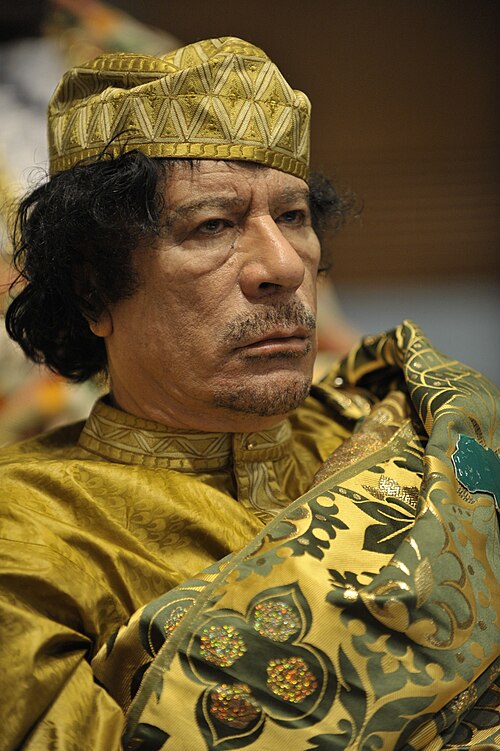
Gaddafi at the African Union summit in 2009

Gaddafi at an Arab summit in Libya in 1969, shortly after the September Revolution that toppled King Idris I. Gaddafi sits in military uniform in the middle, surrounded by Egyptian President Gamal Abdel Nasser (left) and Syrian President Nureddin al-Atassi (right).
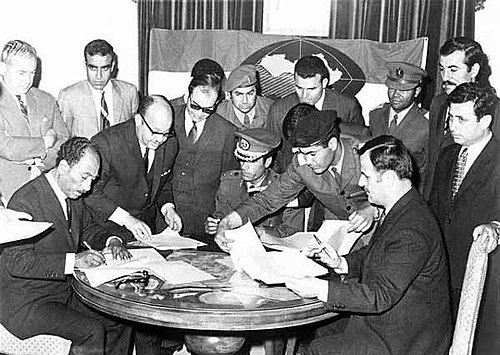
In 1971, Egypt's Anwar Sadat, Libya's Gaddafi and Syria's Hafez al-Assad signed an agreement to form a federal Union of Arab Republics. The agreement never materialized into a federal union between the three Arab states.

Gaddafi addresses students, 1970