Light bomber
Videos
A light bomber is a relatively small and fast type of military bomber aircraft that was primarily employed before the 1950s. Such aircraft would typically not carry more than one ton of ordnance.

Circa 1937. The single-engine PZL.23 Karaś was the main light bomber used by Polish forces at the beginning of World War II.

1943. A twin-engine Lockheed Hudson of No. 2 Squadron RAAF. Its crew and ground staff pose for the photographer, prior to loading the Hudson with its bomb load in the foreground.

An Albatros C.III of the German Luftstreitkräfte, circa 1916. While it was designed as an "armed reconnaissance" type, the C.III was also a light bomber of World War I.

1937. Turkish air force pilot Sabiha Gökçen inspects her Breguet 19 as it is loaded with bombs.
Attack aircraft
Videos
An attack aircraft, strike aircraft, or attack bomber is a tactical military aircraft that has a primary role of carrying out airstrikes with greater precision than bombers, and is prepared to encount
Light bomber
…their bombs in level flight over a target. During World War I some air forces began to distinguish between light bombers and the earliest purpose-built attack aircraft which carried out ground attack, close air support, anti-shipping and similar missions. After World War I, attack aircraft were typically identifiable…
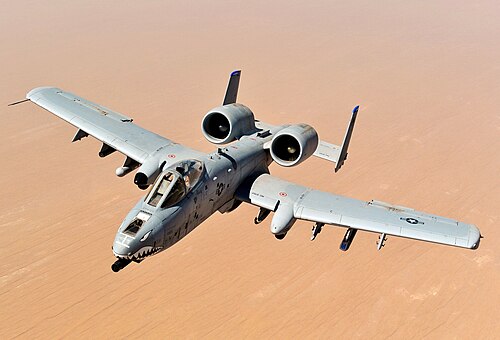
A USAF A-10 Thunderbolt II attack aircraft in flight

An A-1 Skyraider of the USAF

RAF Harrier GR9 in flight, 2008

Boeing GA-1, ~1920