Linear Tape-Open
Videos
Linear Tape-Open, also known as the LTO Ultrium format, is a magnetic tape data storage technology used for backup, data archiving, and data transfer. It was originally developed in the late 1990s as

A 400 GB LTO-3 cartridge by Sony

LTO-2 cartridge with the top shell removed, showing the internal components. Top right corner: tape access gate. Bottom left corner: write-protect-tab. Bottom right corner: cartridge memory chip

LTO-3 cartridge with the top shell removed, showing the internal components. Top right corner: write-protect-tab. Bottom left corner: cartridge memory chip. Bottom: tape access gate.

LTO cartridge memory
Magnetic tape
Videos
Magnetic tape is a medium for magnetic storage made of a thin, magnetizable coating on a long, narrow strip of plastic film. It was developed in Germany in 1928, based on the earlier magnetic wire rec
Linear Tape-Open
…super-tape format. The latest generation as of 2026, LTO-10, defines two unique cartridge types which can hold 30 TB or 40 TB each. Cartridges (a.k.a. tapes) contain hundreds of meters of half-inch (12.65 mm) wide tape media wound onto a single reel. The first generation LTO cartridge was released in 2000…

7-inch reel of ¼-inch-wide audio recording tape, typical of consumer use in the 1950s–70s

Compact Cassette
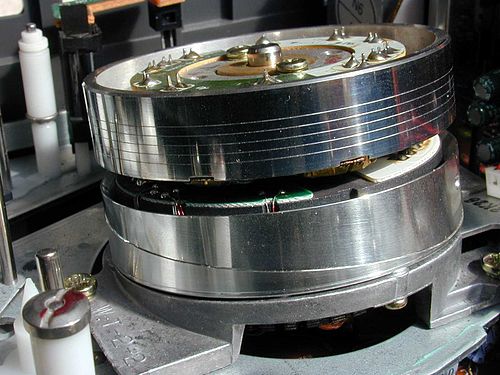
A VHS helical scan head drum. Helical and transverse scans made it possible to increase the data bandwidth to the necessary point for recording video on tapes, and not just audio.

Small open reel of 9-track tape