Lithophone
Videos
Photos
A lithophone is a musical instrument consisting of a rock or pieces of rock which are struck to produce musical notes. Notes may be sounded in combination or in succession (melody). It is an idiophone comparable to instruments such as the glockenspiel, vibraphone, xylophone and marimba.

Lithophone sculpture in Schloss Freudenberg

Lithophone made of Phonolite in the Schellerhau botanic garden (Germany)

Ethiopian Lithophones with Stand, Monastery of Na’akuto La’ab

Stone marimba, range C3–C5
Musical instrument
Videos
Photos
A musical instrument is a device created or adapted to make musical sounds. In principle, any object that produces sound can be considered a musical instrument—it is through purpose that the object becomes a musical instrument. A person who plays a musical instrument is known as an instrumentalist. The history of musical instruments dates to the beginnings of human culture. Early musical instruments may have been used for rituals, such as a horn to signal success on the hunt, or a drum in a religious ceremony. Cultures eventually developed composition and performance of melodies for entertainment. Musical instruments evolved in step with changing applications and technologies.

Anne Vallayer-Coster, Attributes of Music, 1770. This still life painting depicts a variety of French Baroque musical instruments, such as a natural horn, transverse flute, musette, pardessus de viole, and lute.
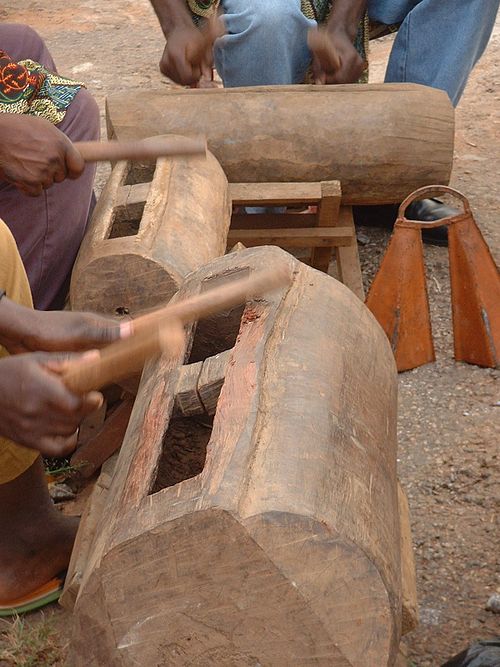
Bamileke slit drum drummers in Cameroon's West Province.

Found in Slovenia, the Divje Babe Flute is sometimes considered the world's oldest known musical instrument

Two Aztec slit drums (teponaztli). The characteristic "H" slits can be seen on the top of the drum in the foreground.