Lochner v. New York, 198 U.S. 45 (1905), was a landmark decision of the U.S. Supreme Court holding that a New York State statute that prescribed maximum working hours for bakers violated the bakers' right to freedom of contract under the Fourteenth Amendment to the U.S. Constitution. The decision has been effectively overturned.
Justice Rufus Peckham, the author of the majority opinion in Lochner
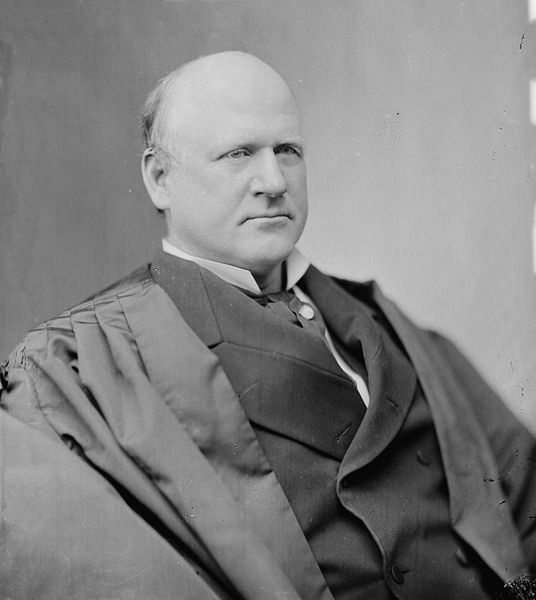
Justice John Marshall Harlan, who authored the first dissent in Lochner.
Justice Oliver Wendell Holmes Jr., who wrote the second dissent in Lochner.
Supreme Court of the United States
The Supreme Court of the United States (SCOTUS) is the highest court in the federal judiciary of the United States. It has ultimate appellate jurisdiction over all U.S. federal court cases, and over state court cases that turn on questions of U.S. constitutional or federal law. It also has original jurisdiction over a narrow range of cases, specifically "all Cases affecting Ambassadors, other public Ministers and Consuls, and those in which a State shall be Party." The court holds the power of judicial review: the ability to invalidate a statute for violating a provision of the Constitution. It is also able to strike down presidential directives for violating either the Constitution or statutory law.
The Royal Exchange, New York City, the first meeting place of the Supreme Court
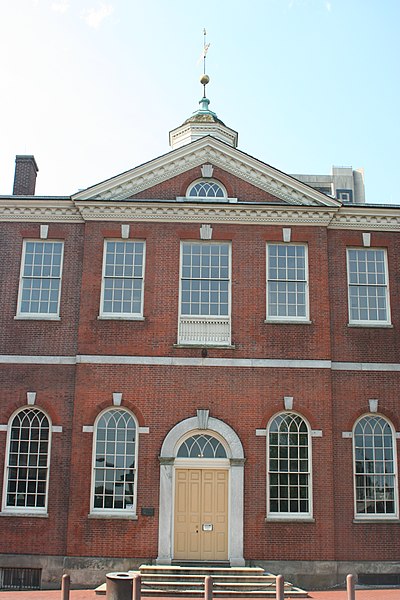
The court lacked its own building until 1935. From 1791 to 1801, it met in Philadelphia's City Hall, before moving to the Capitol Building in Washington, D.C.
John Marshall, chief justice from 1801 to 1835
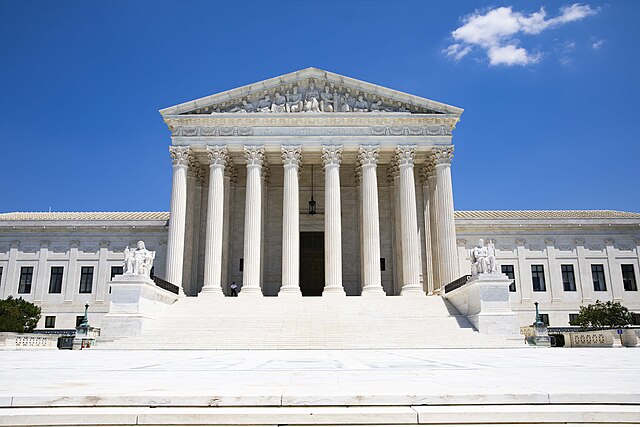
The U.S. Supreme Court Building, current home of the Supreme Court, which opened in 1935