Locus amoenus
Videos
Locus amoenus is a literary topos involving an idealized place of safety or comfort. A locus amoenus is usually a beautiful, shady lawn or open woodland, or a group of idyllic islands, sometimes with

John Constable's Wivenhoe Park, Essex: An idyllic scene featuring trees, grass, and water

Maerten Ryckaert, Rocky Pastoral Landscape

Modern-day Arcadia

Characters in the Forest of Arden in Shakespeare's As You Like It
Hortus conclusus
Videos
Hortus conclusus is a Latin term, meaning literally "enclosed garden". Both words in hortus conclusus refer linguistically to enclosure. It describes a type of garden that was enclosed as a practical
Locus amoenus
…Dream world (plot device) Hortus conclusus Lost Gardens of Heligan…
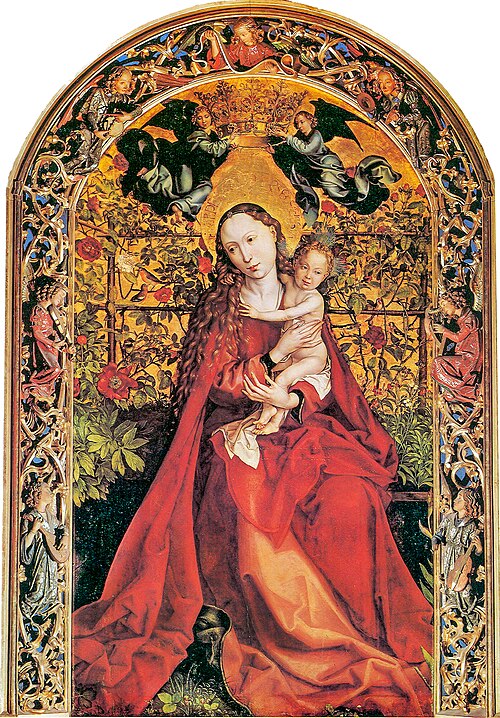
Martin Schongauer, Madonna of the Rose Bower, 1473

The Annunciation - Convent of San Marco, Florence

The Madonna on a Crescent Moon in Hortus Conclusus by an anonymous painter

Medieval-style garden from Coucy, France