Louis IV, Holy Roman Emperor
Videos
Louis IV, called the Bavarian, was King of the Romans from 1314, King of Italy from 1327, and Holy Roman Emperor from 1328 until his death in 1347.
Relief of Louis IV in the Landesmuseum Mainz, c. 1330


The Battle of Mühldorf portrayed as a duel between Frederick and Louis in a Jewish manuscript.

Golden Bull of Louis IV 1328
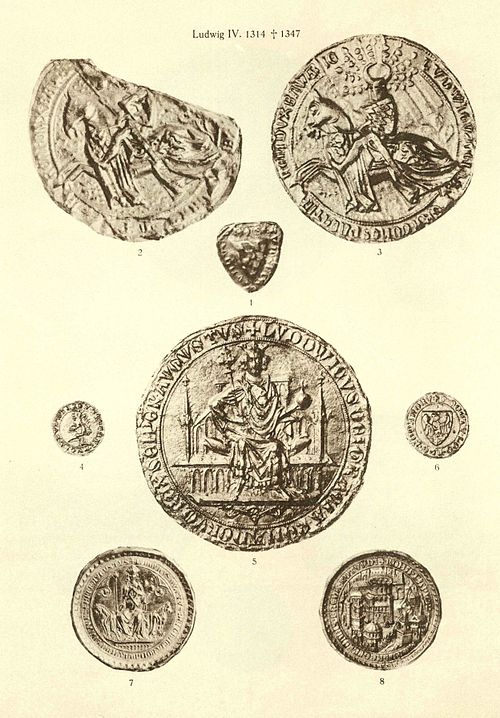
Seals of Louis IV (Otto Posse 1909)
Holy Roman Emperor
Videos
The Holy Roman Emperor, originally and officially the Emperor of the Romans during the Middle Ages, and also known as the Roman-German Emperor since the early modern period, was the ruler and head of
Louis IV, Holy Roman Emperor
…11 October 1347), called the Bavarian (Ludwig der Bayer, Latin: Ludovicus Bavarus), was King of the Romans from 1314, King of Italy from 1327, and Holy Roman Emperor from 1328 until his death in 1347. Louis' election as king of Germany in 1314 was controversial, as his Habsburg cousin Frederick the Fair was…
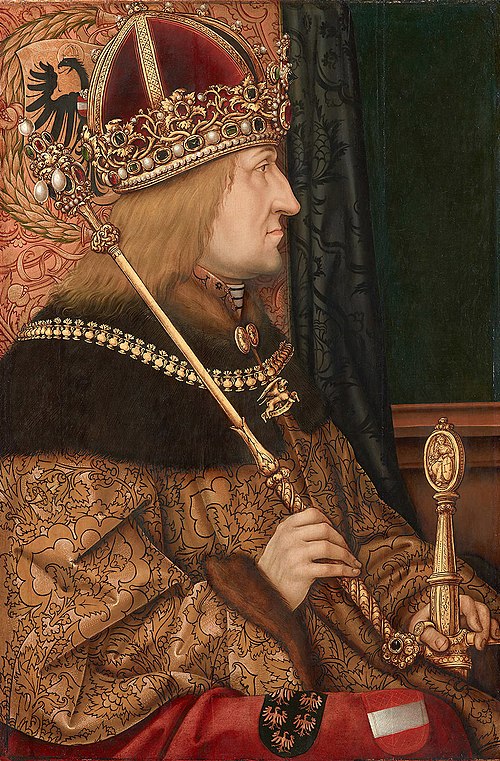
Longest reigning Frederick III 19 March 1452 – 19 August 1493
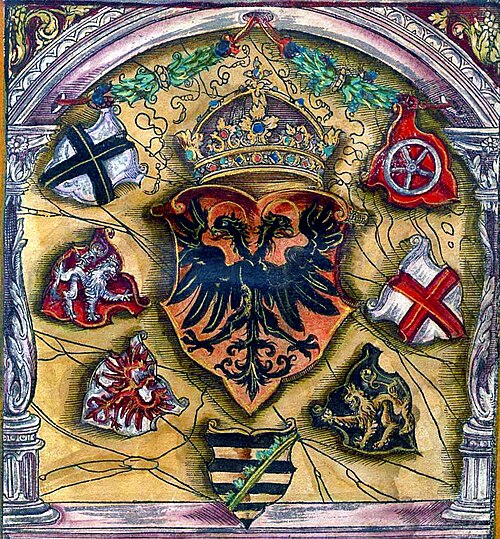
Coats of arms of prince electors surround the imperial coat of arms; from a 1545 armorial. Electors voted in an Imperial Diet for a new Holy Roman Emperor.

Depiction of Charlemagne in a 12th-century stained glass window, Strasbourg Cathedral, now at Musée de l'Œuvre Notre-Dame.
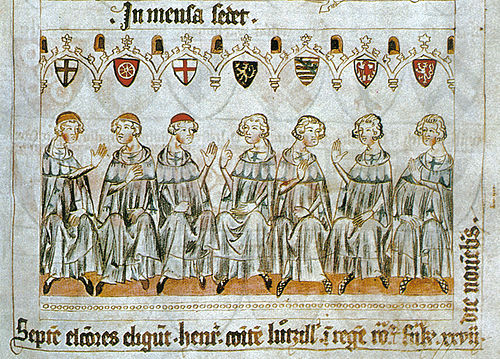
Illustration of the election of Henry VII (27 November 1308) showing (left to right) the Archbishop of Cologne, Archbishop of Mainz, Archbishop of Trier, Count Palatine of the Rhine, Duke of Saxony, Margrave of Brandenburg and King of Bohemia (Codex Balduini Trevirorum, c. 1340).