Luke 13
Videos
Luke 13 is the thirteenth chapter of the Gospel of Luke in the New Testament of the Christian Bible. It records several parables and teachings told by Jesus Christ and his lamentation over the city of Jerusalem. Jesus resumes the journey to Jerusalem which he had embarked upon in Luke 9:51. This chapter, taken with Luke 12:54-59, begins to outline and illustrate "the problem with the Jewish nation" which accounts for the urgency of his journey to Jerusalem. The book containing this chapter is anonymous, however early Christian tradition generally accepts that Luke the Evangelist composed this Gospel as well as the Acts of the Apostles.
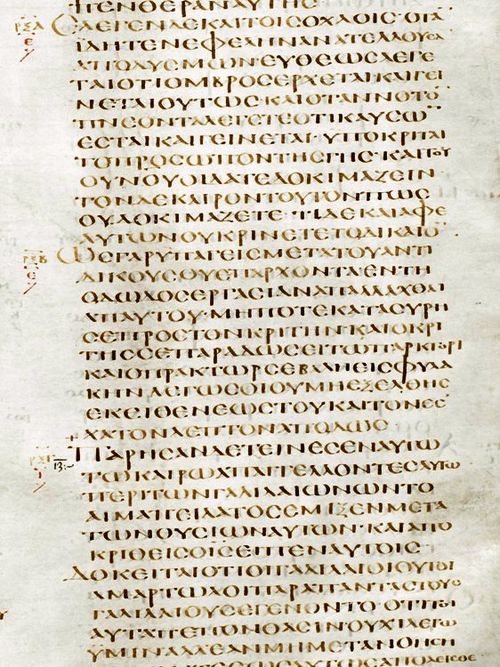

Fig fruit: what the owner expected.

Christ healing an infirm woman by James Tissot, 1886–1896.

The black mustard plant.
Pontius Pilate
Videos
Pontius Pilate was the fifth governor of the Roman province of Judaea, serving under Emperor Tiberius from 26/27 to 36/37 AD. He is best known for being the official who presided over the trial of Jesus and ultimately ordered his crucifixion. Pilate's importance in Christianity is underscored by his prominent place in both the Apostles' and Nicene Creeds. Because the gospels portray Pilate as reluctant to execute Jesus, the Ethiopian Church believes that Pilate became a Christian and venerates him as both a martyr and a saint, a belief which is historically shared by the Coptic Church, with a feast day on 19 or 25 June, respectively.
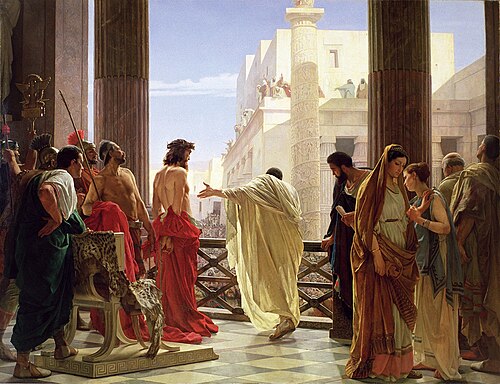
Ecce Homo ("Behold the Man"), Antonio Ciseri's depiction of Pilate presenting a scourged Jesus to the people of Jerusalem

Print of Christus with Pontius Pilate. Made in the 16th century.

Christ before Pilate, Mihály Munkácsy, 1881

A remorseful Pilate prepares to kill himself. Engraving by G. Mochetti after B. Pinelli, early 19th century.