Luna 3
Videos
Luna 3, or E-2A No.1, was a Soviet spacecraft launched in 1959 as part of the Luna programme. It was the first mission to photograph the far side of the Moon and the third Soviet space probe to be sen

A 1:1 scale model at the Memorial Museum of Cosmonautics in Moscow

Luna 3 mission on a Soviet stamp

Luna 3 phototelegraph system at Tsiolkovsky State Museum of the History of Cosmonautics
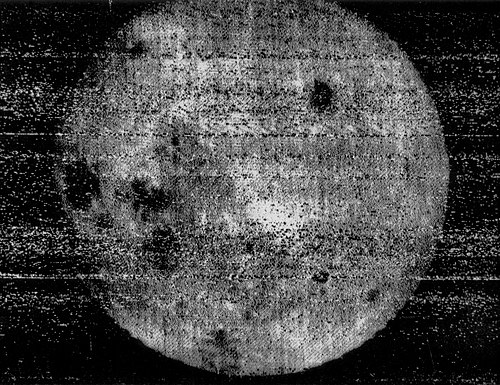
The first view returned by Luna 3 showed the far side of the Moon was very different from the near side, most noticeably in its lack of lunar maria (the dark areas)
Lunar mare
Videos
Lunar maria are large, dark, basaltic plains on Earth's Moon, formed by lava flowing into ancient impact basins. They are less reflective than the "highlands" as a result of their iron-rich compositio
Luna 3
…difference between the two sides of the Moon is still not fully understood, but it seems that most of the dark lavas that flowed out to produce the maria formed under the Earth-facing half. The space probe was a cylindric canister with hemispheric ends and a wide flange near the top. The probe was 130…

Lunar basalt layering exposed

Ancient rift valleys – context.

Ancient rift valleys – closeup (artist's concept).

Irregular mare patch – evidence of young lunar volcanism (12 October 2014)