Lupercalia
Videos
Lupercalia, also known as Lupercal, was a pastoral festival of Ancient Rome observed annually on February 15 to purify the city, promoting health and fertility. Lupercalia was also known as dies Febru

Lupercalia, oil painting, circa 1635

Lupercalia most likely derives from lupus, 'wolf', though both the etymology and its significance are obscure (bronze wolf's head, 1st century AD)

The Lupercalian Festival in Rome (ca. 1578–1610), drawing by the circle of Adam Elsheimer, showing the Luperci dressed as dogs and goats, with Cupid and personifications of fertility

Caesar Refuses the Diadem (1894), when it was offered by Mark Antony during the Lupercalia
Februus
Videos
Februus is an ancient Italic god of purifications, who was worshipped by both the Romans and Etruscans. He was also worshipped as the god of the underworld by the Etruscans. For them, Februus was also
Lupercalia
…name variously, as epithet to Juno Februalis, Februlis, or Februata in her role as patron deity of that month; to a supposed purification deity called Februus; and to February (mensis Februarius), the month during which the festival occurred. Ovid connects februare to an Etruscan word for 'purging'. The name…

Februus and Febris, representing the month of February
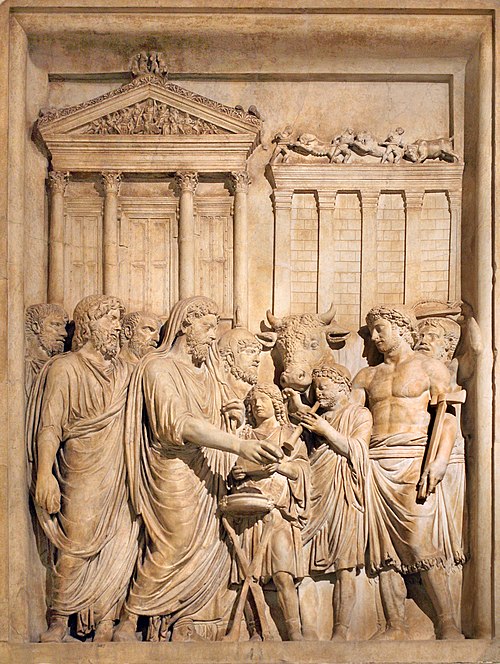
Bas relief from Arch of Marcus Aurelius showing sacrifice