Lutetia
Videos
Lutetia, also known as Lutecia and Lutetia Parisiorum, was a Gallo–Roman town and the predecessor of modern-day Paris. Traces of an earlier Neolithic settlement have been found nearby, and a larger se

Thermes de Cluny

Fragments of a Neolithic boat and pottery found near Bercy
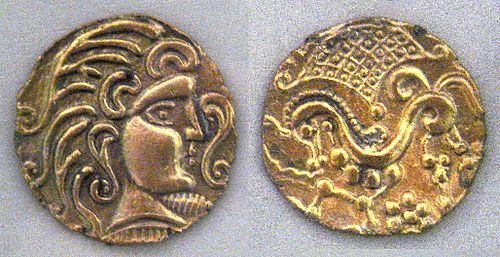
Gold coins minted by the Parisii (1st century BC)

Model of the "pilier des nautes" (1st century AD), Musee Cluny
Parisii (Gaul)
Videos
The Parisii were a Gallic tribe that dwelt on the banks of the river Seine during the Iron Age and the Roman era. They lived on lands now occupied by the modern city of Paris; that name is a derivatio
Lutetia
…Lutetia, ( loo-TEESH-ə; Latin: ; French: Lutèce ) also known as Lutecia and Lutetia Parisiorum ( pə-RIZ-ee-OR-əm; Latin: ; lit. 'Lutetia of the Parisii'), was a Gallo–Roman town and the predecessor of modern-day Paris. Traces of an earlier Neolithic settlement (c. 4500 BC) have been found nearby, and…

Sequani coin 5th to 1st century BCE