Luwian language
Videos
Luwian, sometimes known as Luvian or Luish, is an ancient language, or group of languages, within the Anatolian branch of the Indo-European language family. The ethnonym Luwian comes from Luwiya – the

Luwian hieroglyph BOS (cow)

Luwian hieroglyphs at Hattusa

Stele of Sultanhan, Museum of Anatolian Civilizations, Ankara

Basalt bowl with engraved inscription in Luwian hieroglyphics found in Babylon, southern Iraq, in the 1880s and now in the collection of the British Museum
Anatolian hieroglyphs
Videos
Anatolian hieroglyphs are an indigenous logographic script native to central Anatolia, consisting of some 500 signs. They were once commonly known as Hittite hieroglyphs, but the language they encode
Luwian language
…and ānda "in" is written a-an-ta rather than an-ta. Hieroglyphic Luwian (luwili) is the corpus of Luwian texts written in a native script, known as Anatolian hieroglyphs. It is recorded in official and royal seals and a small number of monumental inscriptions. It was once thought to be a variety of the Hittite language…

An inscription from Hama, in Anatolian hieroglyphs
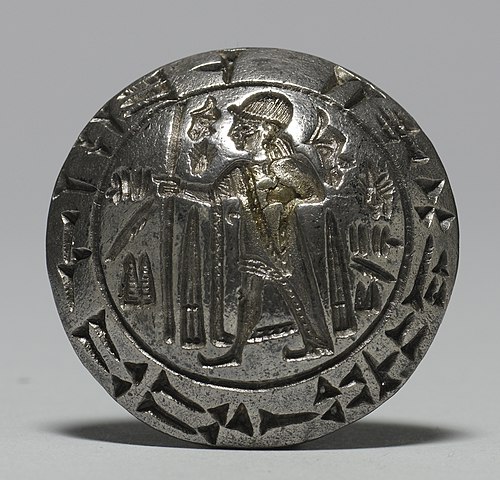
Anatolian hieroglyphs surround a figure in royal dress. The inscription, repeated in cuneiform around the rim, gives the seal owner's name: the ruler Tarkasnawa of Mira. This famous bilingual inscription provided the first clues for deciphering Anatolian hieroglyphs.

The Marash Lion, with Anatolian hieroglyphs

Marash Lion side view