Lyre
Videos
The lyre is a stringed musical instrument that is classified by Hornbostel–Sachs as a member of the lute family of instruments. In organology, a lyre is considered a yoke lute, since it is a lute in w
Greek vase with muse playing the phorminx, a type of lyre

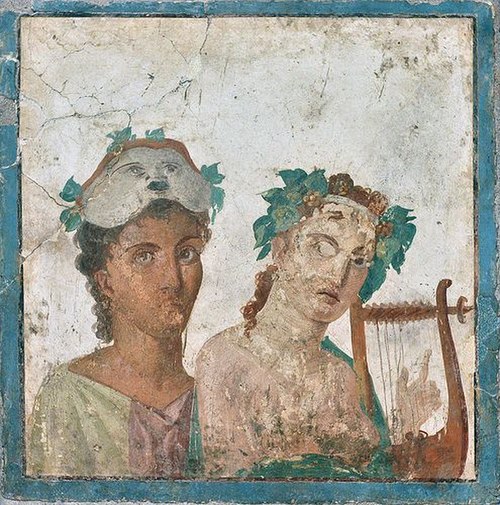
A Roman fresco from Pompeii, 1st century AD, depicting a man in a theatre mask and a woman wearing a garland while playing a lyre

The Minoan sarcophagus of Hagia Triada, 14th century BCE, depicting the earliest lyre with seven strings, held by a man with long robe, third from the left.

A lyre from Ancient Egypt, found in Thebes
Lute
Videos
A lute is any plucked string instrument with a neck and a deep round back enclosing a hollow cavity, usually with a sound hole or opening in the body. It may be either fretted or unfretted.
Lyre
…that is classified by Hornbostel–Sachs as a member of the lute family of instruments. In organology, a lyre is considered a yoke lute, since it is a lute in which the strings are attached to a yoke that lies in the same plane as the sound table, and consists of two arms and a crossbar. The lyre has its…
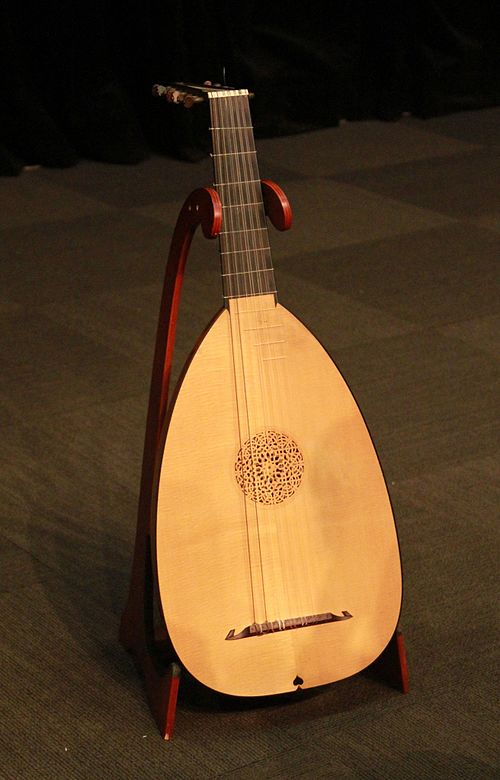
Renaissance lute in 2013

Ancient Egyptian tomb painting depicting players with long-necked lutes, 18th Dynasty (c. 1350 BC).

Hellenistic banquet scene from 1st century A.D., Hadda, Gandhara. Lute player with short-necked lute, far right.

Lute in Pakistan, Gandhara, probably Butkara in Swat, Kushan Period (1st century-320)