Macaroni (fashion)
Videos
"Macaroni" was a pejorative term used to describe a fashionable fellow of 18th-century Britain. Stereotypically, men in the macaroni subculture dressed, spoke, and behaved in an androgynous manner. Th
Self portrait of Richard Cosway, a Georgian-era portrait painter, who was known as the "Macaroni Artist"

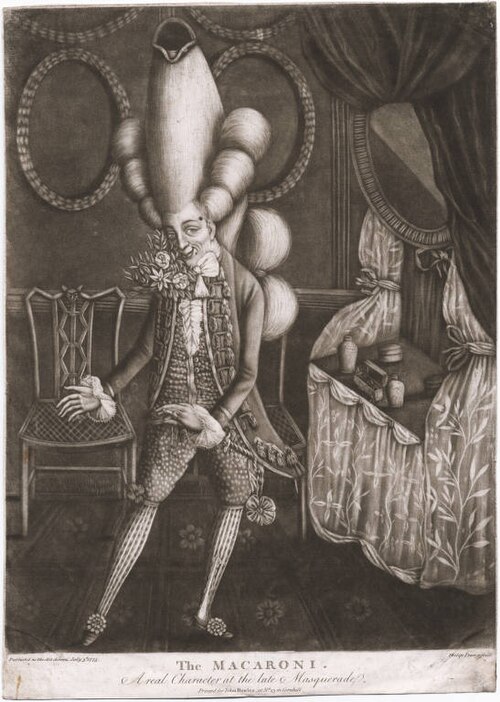
"The Macaroni. A real Character at the late Masquerade", mezzotint by Philip Dawe, 1773
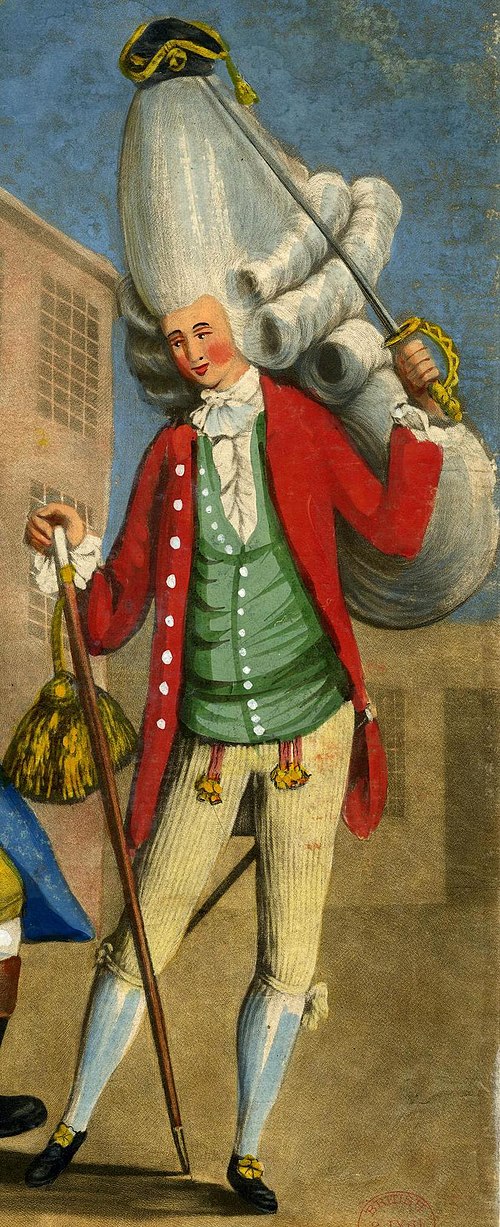
A fop from "What is this my Son Tom?", 1774

The prominently-crested macaroni penguin
Androgyny
Videos
Androgyny is the possession of both masculine and feminine characteristics. Androgyny may be expressed with regard to gender expression.
Macaroni (fashion)
…term used to describe a fashionable fellow of 18th-century Britain. Stereotypically, men in the macaroni subculture dressed, spoke, and behaved in an androgynous manner. The term "macaroni" pejoratively referred to a man who "exceeded the ordinary bounds of fashion" in terms of high-end clothing, fastidious…

Louise Brooks exemplified the flapper. Flappers challenged traditional gender roles and had boyish hair cuts and androgynous figures.

Labor leader Luisa Capetillo wearing men's clothing

Yves Saint Laurent, the tuxedo suit "Le Smoking", created in 1966

Pop stars Boy George (pictured) and Annie Lennox appeared on the front cover of Smash Hits magazine in December 1983 in identical makeup, followed by the cover of Newsweek in January 1984 to mark a second British Invasion. Music journalist Sue Steward wrote that the Smash Hits cover "begged the question, 'Which one is the boy?'"