Mahabharata
Videos
The Mahābhārata is one of the two major Sanskrit epics of ancient India revered in Hinduism, the other being the Ramayana. Both are considered smriti and itihasa texts.
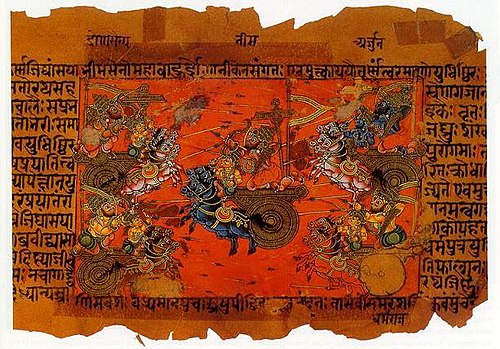
Manuscript illustration of the Battle of Kurukshetra

Krishna and Arjuna at Kurukshetra, 18th–19th-century painting

Vyasa narrating the Mahābhārata to Ganesha from a 17th century Mewar manuscript.
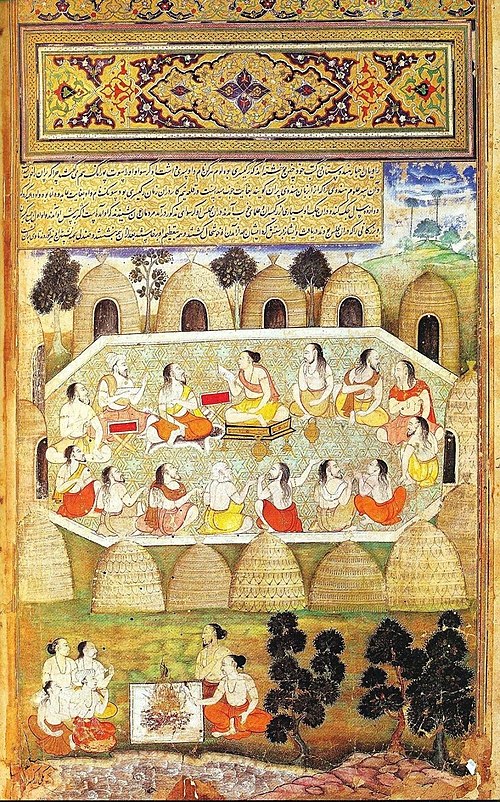
Sauti recites the slokas of the Mahabharata.
Bhagavad Gita
Videos
The Bhagavad Gita, often referred to as the Gita, is a Hindu scripture, likely composed in the second or first century BCE, which forms part of the epic poem Mahabharata. The Bhagavad Gita is a synthe
Mahabharata
…material, such as a discussion of the four "goals of life" or puruṣārtha (12.161). Among the principal works and stories in the Mahābhārata are the Bhagavad Gita, the story of Damayanti, Shakuntala, Pururava and Urvashi, Savitri and Satyavan, Kacha and Devayani, Rishyasringa and an abbreviated version of the…

Bhagavad Gita's revelation: Krishna tells the Gita to Arjuna

Vāsudeva-Krishna, on a coin of Agathocles of Bactria c. 180 BCE. This is "the earliest unambiguous image" of the deity.

A Sanskrit manuscript of the Bhagavad Gita in the Devanagari script. c. 1800 – c. 1900 CE