Majo
Videos
Majo or maja, also manolo and manola, after the most popular names, were people from the lower classes of Spanish society, especially in Madrid, who distinguished themselves by their elaborate outfits
El paseo por Andalucía, by Francisco de Goya, depicts both majas and majos.


A typical manola with a folding fan by Ulpiano Checa

El majo de la guitarra, painting by Ramón Bayeu, 1786
La maja desnuda
Videos
The Naked Maja or The Nude Maja is an oil-on-canvas painting made around 1797–1800 by the Spanish artist Francisco Goya, and has been in the Museo del Prado in Madrid since 1901. It portrays a nude wo
Majo
…connect it to Maia and May queens. Although majos of both sexes were frequent subjects of painter Francisco Goya, two of his majas, La maja vestida and La maja desnuda (the same model, clothed and nude respectively), would gain international renown. The outfit of the maja would influence the costume of the eponymous…

Goya Maja naga 2

La maja vestida, c. 1803. Museo del Prado, Madrid.

Diego Velázquez, Rokeby Venus, c. 1647–51. National Gallery, London.
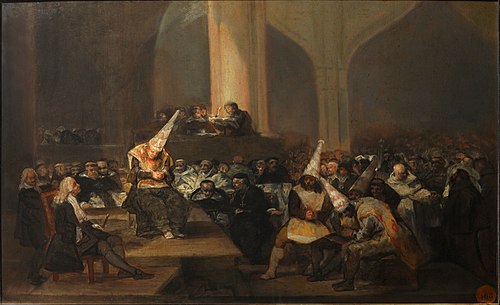
Goya, The Inquisition Tribunal, c. 1808–12. Goya detested the inquisition and depicted it in harsh terms a number of times, and satirised it in works such as his c. 1820–1823 Witches' Sabbath.