Malayalam
Videos
Malayalam is a Dravidian language, primarily spoken by the Malayali people, native to the Indian state of Kerala and the union territories of Lakshadweep and Puducherry. It is one of 22 scheduled lang

The Quilon Syrian copper plates (849/850 CE) are considered as the oldest available inscription written in Old Malayalam. Besides Old Malayalam, the copper plate also contains signatures in Arabic (Kufic script), Middle Persian (cursive Pahlavi script) and Judeo-Persian (standard square Hebrew) scripts.

Veerakkal Tamil-Brahmi inscription (ca. 2nd cent. BCE) from Pulimaankombai, raised in memory of tīyaṉ antavaṉ, who died in a cattle raid in a village called kūṭal ūr. The words 'peṭu' and 'tīyaṉ' are regarded by Iravatham Mahadevan as pre-Malayalam terms, with "tīyaṉ" (thiyyar) being the name for a caste from Kerala. The inscription contributed to Malayalam being granted classical language status by the Government of India, a status which is granted to languages deemed older than 2,000 years by the "Linguistic Expert Committee."

Copy of Ezhuthachan's stylus and Adhyatma Ramayanam preserved at Thunchan Parambu, Tirur

A Malayalam signboard from Kannur, Kerala. Malayalam is official language in the Indian state of Kerala and the union territories of Lakshadweep and Puduchery
Malayalis
Videos
The Malayalis are a Dravidian ethnic group native to the southern Indian state of Kerala and the union territory of Lakshadweep. They are predominantly native speakers of the Malayalam language, one o
Malayalam
…Malayalam (മലയാളം, Malayāḷam, ) is a Dravidian language, primarily spoken by the Malayali people, native to the Indian state of Kerala and the union territories of Lakshadweep and Puducherry (Mahé district). It is one of 22 scheduled languages, as…

Malayali men performing the Kerala native martial art, Kalaripayattu

Kerala Samajam, Mysore

A typical Nalukettu structure.
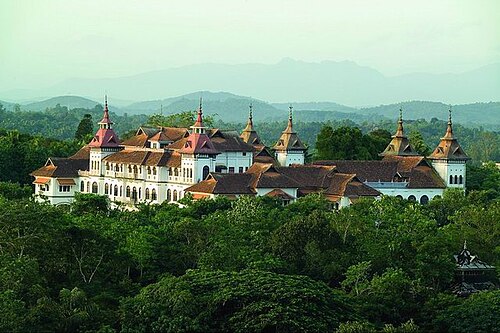
The Kowdiar Palace, the palace of the Maharajah of Travancore, was built with a traditional Malayali architecture style with a slight influence of early modern European elements