Mandala of the Two Realms
Videos
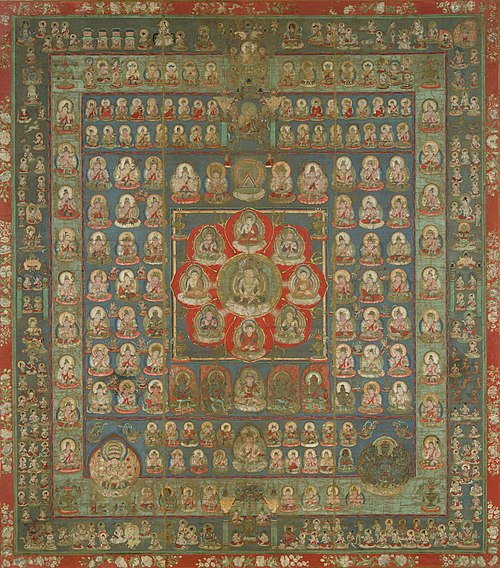
The Mandala of the Two Realms, also known as the Mandala of the Two Divisions, is a set of two mandalas in East Asian Esoteric Buddhism, particularly prominent within Chinese Esoteric Buddhism as well
Garbhadhātu (Womb Realm) maṇḍala with Mahāvairocana at the center.
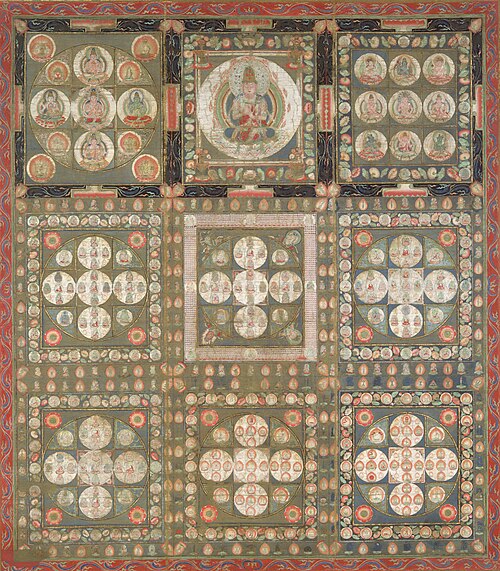
Vajradhātu (Vajra Realm) Mandala

Relief of eight great bodhisattvas at Ellora Caves (cave no. 12) in a nine square pattern.

Indian Terracotta mandala, c. 6th century
Shingon Buddhism
Videos
Shingon is one of the major schools of Buddhism in Japan and one of the few surviving Vajrayana lineages in East Asian Buddhism. It is a form of Japanese Esoteric Buddhism and is sometimes called "Tōm

Danjō garan of Kongōbu-ji, the head temple of the Kōyasan sect based in Mount Kōya

Kamakura-period statue of Thousand-armed Kannon at Sanjūsangen-dō in Kyoto, Japan.
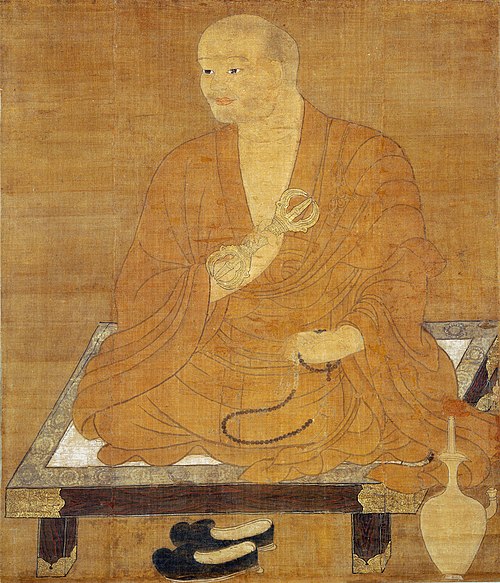
Painting of Kūkai from a set of scrolls depicting the first eight patriarchs of the Shingon school. Japan, Kamakura period (13th–14th centuries).

Jingo-ji, on Mount Takao, the first major temple in which Kūkai worked on his return to Japan