Manichaeism
Videos
Manichaeism was a major world religion founded in the third century CE by the Parthian Iranian prophet Mani in the Sasanian Empire. It taught an elaborate dualistic cosmology describing the struggle b
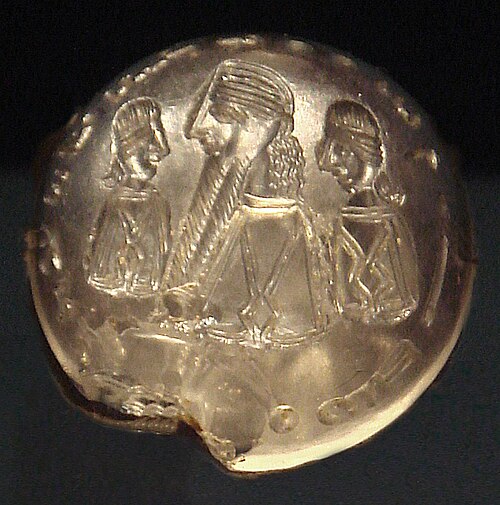
Sealstone of Mani, carved quartz crystal, possibly 3rd century AD, Iraq. Cabinet des Médailles, Paris. The seal reads "Mani, messenger of the messiah", and may have been used by Mani himself to sign his letters.
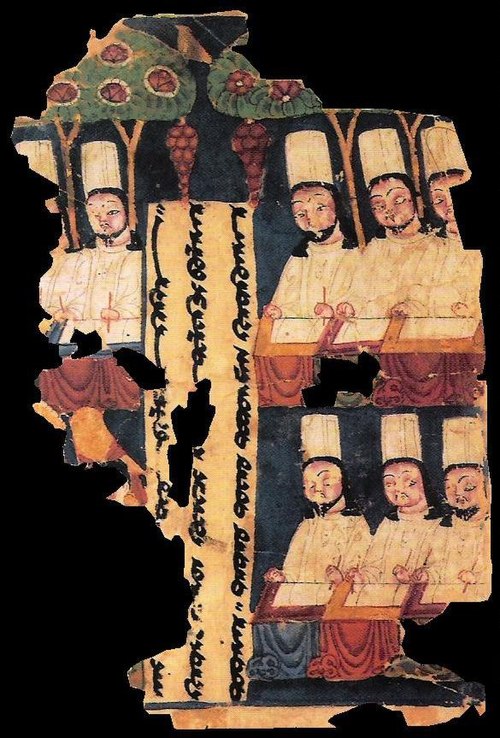
Manichaean priests, writing at their desks. Eighth or ninth century manuscript from Gaochang, Tarim Basin, China.

Yuan Chinese silk painting Mani's Birth

A 14th-century illustration of the execution of Mani
Sasanian Empire
Videos
The Sasanian Empire, officially Eranshahr, was an Iranian empire that was founded and ruled by the House of Sasan from 224 to 651 AD. Lasting for over four centuries, the length of the Sasanian dynast
Manichaeism
…Mānī; Chinese: 摩尼教; pinyin: Móníjiào) was a major world religion founded in the third century CE by the Parthian Iranian prophet Mani (216–274) in the Sasanian Empire. It taught an elaborate dualistic cosmology describing the struggle between a good spiritual world of light, and an evil material world of darkness…

Initial coinage of founder Ardashir I, as King of Persis Artaxerxes (Ardaxsir) V. c. 205/6–223/4 AD. Obverse: Bearded facing head, wearing diadem and Parthian-style tiara, legend "The divine Ardaxir, king" in Pahlavi. Reverse: Bearded head of Papak, wearing diadem and Parthian-style tiara, legend "son of the divinity Papak, king" in Pahlavi.

1840 illustration of a Sasanian relief at Firuzabad, showing Ardashir I's victory over Artabanus IV and his forces.

Rock relief of Ardashir I receiving the ring of kingship by the Zoroastrian supreme god Ahura Mazda

Rock-face relief at Naqsh-e Rostam of Persian emperor Shapur I (on horseback) capturing Roman emperor Valerian (standing) and Philip the Arab (kneeling), suing for peace, following the victory at Edessa.