Manlia gens
Videos
The gens Manlia was one of the oldest and noblest patrician houses at Rome, from the earliest days of the Republic until imperial times. The first of the gens to obtain the consulship was Gnaeus Manli

Denarius of Lucius Manlius Torquatus, 113–112 BC. The obverse depicts the head of Roma within a torque, the emblem of the Manlii Torquati. The reverse depicts a warrior charging into battle on horseback, beneath the letter 'Q', signifying Torquatus' quaestorship.

Denarius of Lucius Manlius Torquatus, 65 BC. The obverse depicts the head of the Sibyl, while a tripod and amphora, instruments of the quindecimviri sacris faciundis, appear within a torque on the reverse.

Aureus of Lucius Manlius Torquatus with Sulla, 82 BC. The obverse depicts a head of Roma, while on the reverse a victorious general triumphs in a quadriga, crowned by Victoria, alluding to Sulla's campaign against the younger Marius and Papirius Carbo.

Denarius of Aulus Manlius, 118–107 BC. The obverse depicts a head of Roma, while Sol drives a quadriga on the reverse.
Patrician (ancient Rome)
Videos
The patricians were originally a group of ruling class families in ancient Rome. The distinction was highly significant in the Roman Kingdom and the early Republic, but its relevance waned after the C
Manlia gens
…The gens Manlia (Mānlia) was one of the oldest and noblest patrician houses at Rome, from the earliest days of the Republic until imperial times. The first of the gens to obtain the consulship was Gnaeus Manlius Cincinnatus…
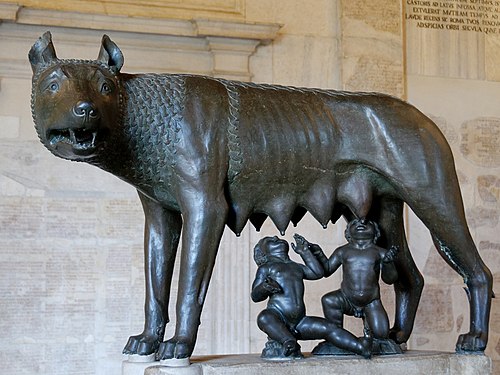
Romulus and his brother, Remus, with the she-wolf. Romulus is credited with creating the patrician class.