Manor house
Videos
A manor house was historically the main residence of the lord of the manor. The house formed the administrative centre of a manor in the European feudal system; within its great hall were usually held
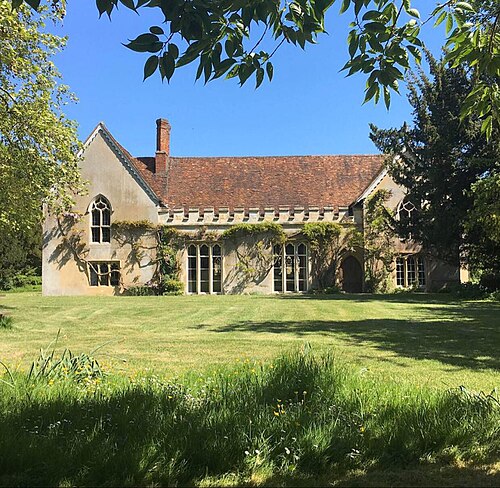
The Abbey, Sutton Courtenay in Oxfordshire (previously Berkshire), considered to be a "textbook" example of the English medieval manor house

Markenfield Hall in North Yorkshire, a 14th-century manor house with moat and gatehouse

Ightham Mote, a 14th-century moated manor house in Kent, England

Leeds Manor House Blue Plaque, Scarborough Hotel
Mansion
Videos
A mansion is a large dwelling house. The word itself derives through Old French from the Latin word mansio "dwelling", an abstract noun derived from the verb manere "to dwell". The English word manse
Manor house
…Priory to their name. During the second half of the reign of Queen Elizabeth I (1558–1603) and under her successor King James I (1603–1625) the first mansions designed by architects not by mere masons or builders, began to make their appearance. Such houses as Burghley House, Longleat House, and Hatfield House…

A Neo-Gothic mansion in Comillas (Cantabria), Spain

Drumthwacket, the official mansion of residence for the governor of New Jersey
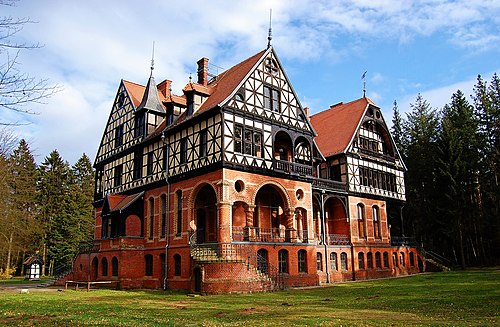
Gelbensande Manor, an 1885 Gründerzeit style mansion built for hunting, near Rostock, Germany

Renaissance villas such as Villa Rotonda near Vicenza, Italy were an inspiration for many later mansions, especially during the industrialization.