Mao Zedong
Videos
Mao Zedong was a Chinese communist revolutionary, political theorist and the founder of the People's Republic of China. He led China from the PRC's establishment in October 1949 until his death in Sep
Formal portrait, 1950


Mao in 1913
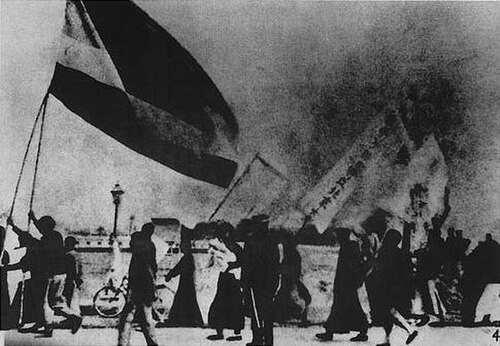
Students in Beijing rallying during the May Fourth Movement

Location of the first Congress of the Chinese Communist Party in July 1921, in Xintiandi, former French Concession, Shanghai
Jiang Qing
Videos
Jiang Qing, born Li Yunhe, also known as Li Jin, and briefly known by her stage name Lan Ping in the 1930s Shanghai, was a Chinese revolutionary, actress, and political figure. The fourth wife of Mao
Mao Zedong
…had been injured by a shrapnel wound to the head. She travelled to Moscow for medical treatment; Mao proceeded to divorce her and marry an actress, Jiang Qing. He Zizhen was reportedly "dispatched to a mental asylum in Moscow to make room" for Qing. Mao moved into a cave-house and spent much of his time…

Jiang in 1976

Jiang in Qingdao in 1931

Jiang in a 1935 film poster

Collective wedding in Hangzhou (Jiang is the third woman from the left)