March of Carinthia
Videos
The March of Carinthia was a frontier district of the Carolingian Empire. It was created in 889, by king Arnulf of East Francia, encompassing the region of Carantania. Before it became a march, it was
The Eastern Francia (Germany) in 962, with the March of Carinthia as the central portion of the collection of Bavarian marches hatched in orange in the lower right.


Holy Roman Empire about 1000: The succeeding Duchy of Carinthia shown in brown with the marches of Verona, Istria, Carniola and Styria, according to William Robert Shepherd, 1923
Carantania
Videos
Carantania, also known as Carentania, was a Slavic principality that emerged in the second half of the 7th century, in the territory of present-day southern Austria and north-eastern Slovenia. Since t
March of Carinthia
…frontier district (march, or margraviate) of the Carolingian Empire. It was created in 889, by king Arnulf of East Francia, encompassing the region of Carantania. Before it became a march, it was organized as a county, since 828 under the Bavarian jurisdiction. In 976, the march of Carinthia was raised into a…
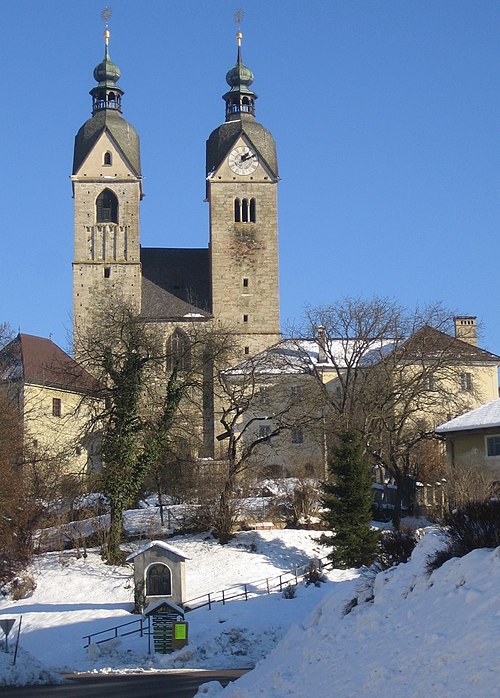
Church of Maria Saal (Gospa Sveta)

The installation of the Dukes of Carinthia according to a Medieval chronicle

Tabula Ducatus Carnioliae, Vindorum Marchiae et Histriae