Marcomannic Wars
Videos
The Marcomannic Wars were a series of wars lasting from about AD 166 until 180. These wars pitted the Roman Empire against principally the Germanic Marcomanni and Quadi and the Sarmatian Iazyges; ther

Detail of a relief scene on the Column of Marcus Aurelius (in Rome, Italy), depicting a battle of the Marcomannic Wars, late 2nd century AD
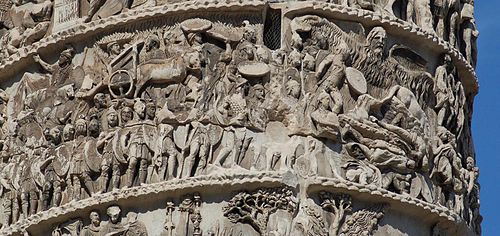
The "Miracle of the Rain", from the Aurelian column. An unidentified "rain god" (top right) saves the Roman army.

Marcus Aurelius receiving the submission of Germanic leaders

Marcus Aurelius celebrating his triumph in a quadriga
Slovakia in the Roman era
Videos
Slovakia was partly occupied by Roman legions for a short period of time. Marcomannia was a proposed province of the Roman Empire that Emperor Marcus Aurelius planned to establish in this territory. I

The light pink area north of the Danube was temporarily occupied by the Romans in 178–179 AD and was meant to become the new Roman province of Marcomannia

The Column of Marcus Aurelius in Piazza Colonna, Rome, depicting his victorious campaign against the Marcomanni, Quadi, and Sarmatians

A Roman inscription in Laugaricio, ordered by Marcus Valerius Maximianus, at the castle hill of Trenčín (178–179 AD)
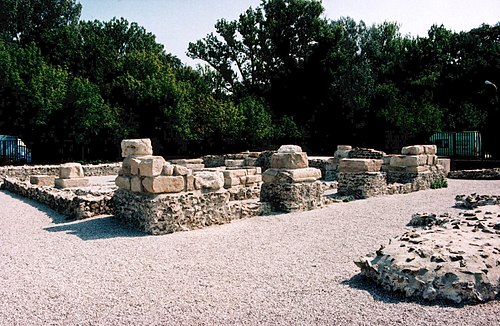
Ruins of Gerulata