Marcus Licinius Crassus
Videos
Marcus Licinius Crassus was a Roman general and statesman who played a key role in the transformation of the Roman Republic into the Roman Empire. Often called "the richest man in Rome", Crassus began
Bust found in the Licinian Tombs in Rome, traditionally identified as Crassus.
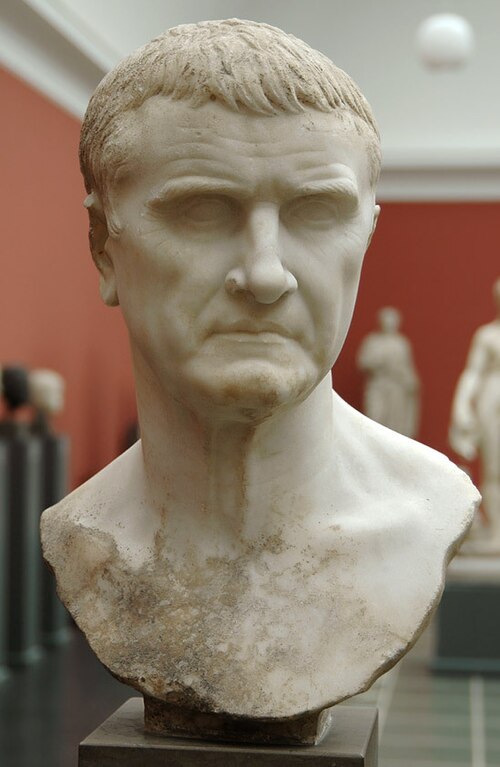
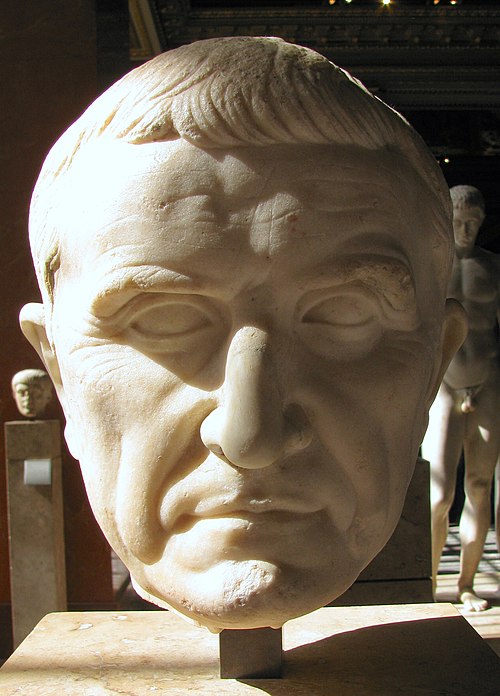
Marcus Licinius Crassus

Denarius minted by Publius Licinius Crassus, son of the triumvir Marcus, as monetalis in 55 BC; on the obverse is a laureate bust of Venus, perhaps in honor of his commanding officer Julius Caesar; on the reverse is an unidentified female figure, perhaps representing Gaul

"The torture of Crassus", 1530s, Louvre
Battle of Carrhae
Videos
The Battle of Carrhae was fought in 53 BC between the Roman Republic and the Parthian Empire near the ancient town of Carrhae. An invading force of seven legions of Roman heavy infantry under Marcus L
Marcus Licinius Crassus
…as the launchpad for a military campaign against the Parthian Empire. The campaign was a disastrous failure, ending in his defeat and death after the Battle of Carrhae. Crassus' death permanently unraveled the alliance between Caesar and Pompey, since his political influence and wealth had maintained a balance between…

Extent of the Parthian Empire

Formations at the start of the battle

Relief of a Parthian cataphract attacking a lion using kontos