Marine steam engine
Videos
A marine steam engine is a steam engine that is used to power a ship or boat. This article deals mainly with marine steam engines of the reciprocating type, which were in use from the inception of the

Period cutaway diagram of a triple-expansion steam engine installation, circa 1918. This particular diagram illustrates possible engine cutoff locations, after the Lusitania disaster and others made it clear that this was an important safety feature.
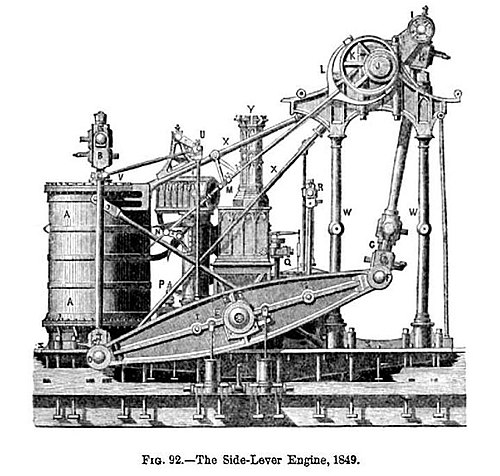
Side-lever engine of SS Pacific (1849)

Side-lever engine of RMS Persia (1855)

Model of the twin side-lever engines of the 1836 Thames River steamboat Ruby
Steamboat
Videos
A steamboat is a boat that is propelled primarily by steam power, typically driving propellers or paddlewheels. The term steamboat is used to refer to small steam-powered vessels working on lakes, riv
Marine steam engine
…to power a ship or boat. This article deals mainly with marine steam engines of the reciprocating type, which were in use from the inception of the steamboat in the early 19th century to their last years of large-scale manufacture during World War II. Reciprocating steam engines were progressively replaced…

Lookout, transport steamer on the Tennessee River, c. 1860–1865

Dutch river steam-tugboat Mascotte II

Steam turbine arrangement of a Twin Screw Torpedo Boat.

Model of the steamship built in 1784 by Claude de Jouffroy.