Mary Somerville
Videos
Mary Somerville was a Scottish scientist, writer, and polymath. She studied mathematics and astronomy, and in 1835 she and Caroline Herschel were elected as the first female Honorary Members of the Ro
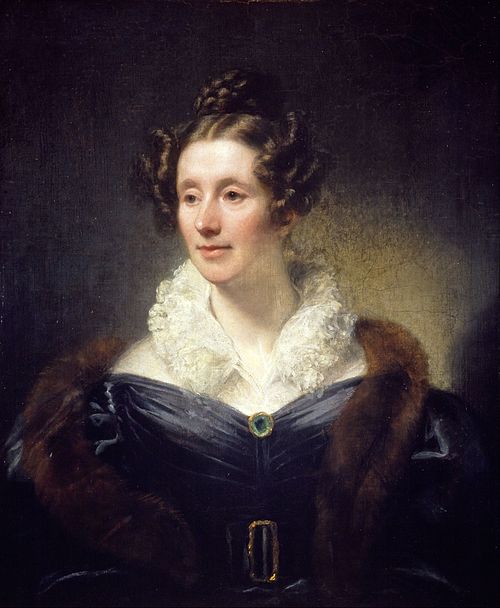
Portrait of Mary Somerville by Thomas Phillips, 1834
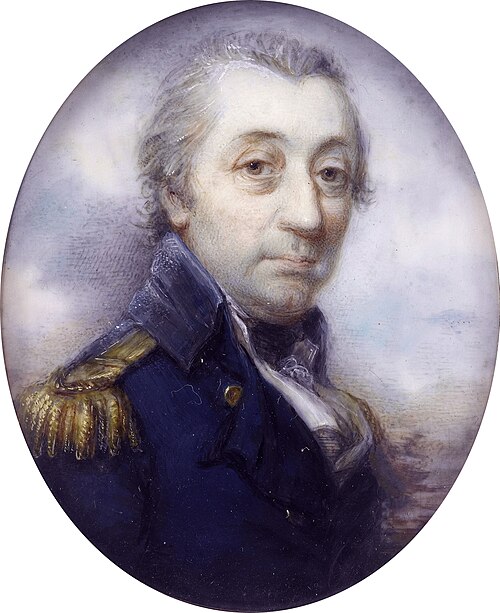
Vice-Admiral William Fairfax; Mary's father, painted in 1798

View of the City of Edinburgh by Alexander Nasmyth. Mary spent the winters in Edinburgh and attended Nasmyth's academy.
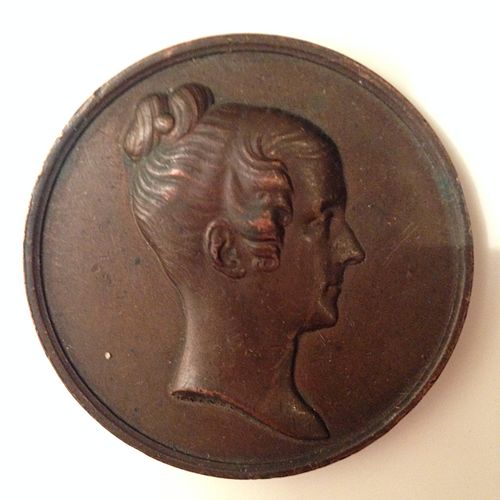
Commemorative medal of Mary Somerville
Caroline Herschel
Videos
Caroline Lucretia Herschel was a German astronomer, whose most significant contributions to astronomy were the discoveries of several comets, including the periodic comet 35P/Herschel–Rigollet, which
Mary Somerville
…née Fairfax, formerly Greig; 1780–1872) was a Scottish scientist, writer, and polymath. She studied mathematics and astronomy, and in 1835 she and Caroline Herschel were elected as the first female Honorary Members of the Royal Astronomical Society. In John Stuart Mill's 1866 mass petition to the UK Parliament to…

Caroline Herschel at 78, one year after winning the Gold Medal of the Royal Astronomical Society in 1828

Caroline Herschel giving tea to her brother William polishing a telescope mirror, 1896 Lithograph

A telescope that William Herschel made for Caroline 1795
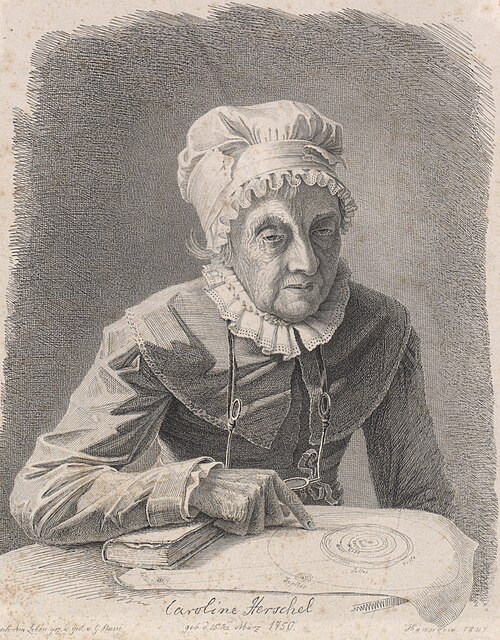
1847 lithograph of Caroline Herschel around 97 years of age