Mast (sailing)
Videos
The mast of a sailing vessel is a tall spar, or arrangement of spars, erected vertically or near-vertically on the median line of a ship or boat. A mast may carry sails, spars, and derricks. It may al
Three-masted training ship Mersey (c. 1908-1915)
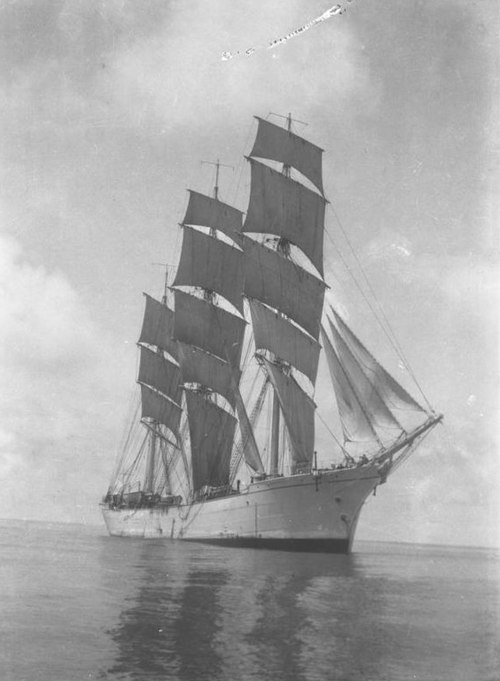

Main topgallant mast

This photo of the full-rigged ship Balclutha, shows the fore-mast, main-mast and mizzen-mast, as well as all the ship's standing and running rigging.
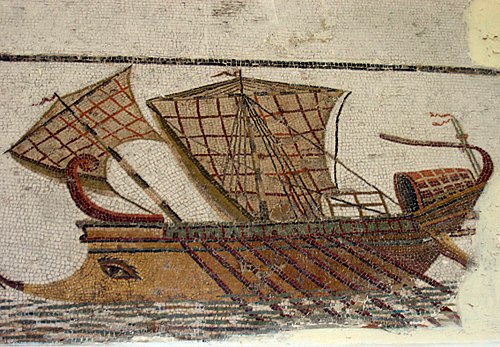
Roman two-masted ship, its foremast showing a typically strong forward rake
Yard (sailing)
Videos
A yard is a spar on a mast from which sails are set. It may be constructed of timber or steel or from more modern materials such as aluminium or carbon fibre. Although some types of fore and aft rigs

The fore royal yard on the Prince William. Prince William's royal yards are the highest and smallest yards on the ship, are made of wood, and are "lifting yards" that can be raised along a section of the mast. Here it is in the lowered position.

A view of Stavros S Niarchos's main-topgallant yard shortly after maintenance, clearly showing its various parts. On relatively "modern" late-nineteenth-century rigs like this, the quarters make up almost all of it. Click the picture for more details.

The yards are mounted on the mast in such a fashion as to allow free movement under the control of lifts and braces. The sail on this yard is "in its gear" (see Setting section)—it is hanging below the yard but still folded up rather than spread to the wind.

The fore course is stowed neatly on top of its yard. On the Prince William this yard is made of steel, does not lift, and weighs around two tons. The two people higher up are working on the fore lower topsail yard. Here, the sails are bent only to the yards' quarters and the yardarms are very short.