Mathematical beauty
Videos
Mathematical beauty is a type of aesthetic value that is experienced in doing or contemplating mathematics. The testimonies of mathematicians indicate that various aspects of mathematics—including res

Diagram from Leon Battista Alberti's 1435 Della Pittura, with pillars in perspective on a grid

FWF Samuel Monnier
Paul Dirac
Videos
Paul Adrien Maurice Dirac was an English theoretical physicist who is considered to be one of the founders of quantum mechanics. Dirac laid the foundations for both quantum electrodynamics and quantum
Mathematical beauty
…J + ε 0 ∂ E ∂ t ) Einstein's theory of general relativity has been characterized as a work of art, and, among other aesthetic praise, was described by Paul Dirac as having "great mathematical beauty" and by Penrose as having "supreme mathematical beauty". (There can be more to the beauty of a scientific theory…
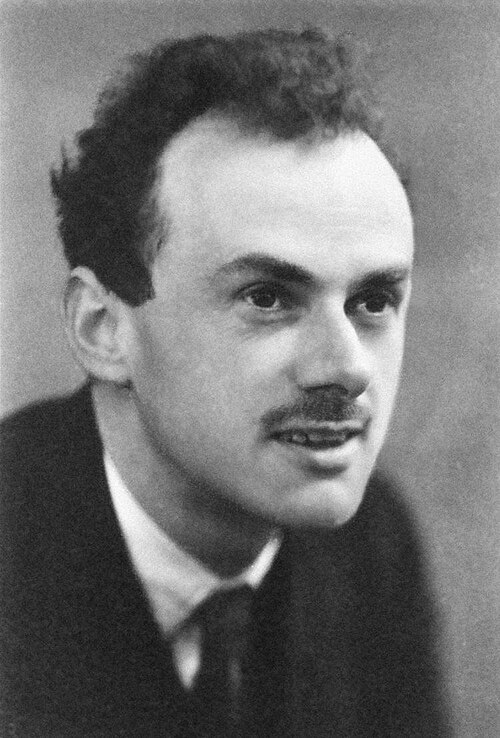
Dirac in 1933

Paul and Manci Dirac in Copenhagen, July 1963
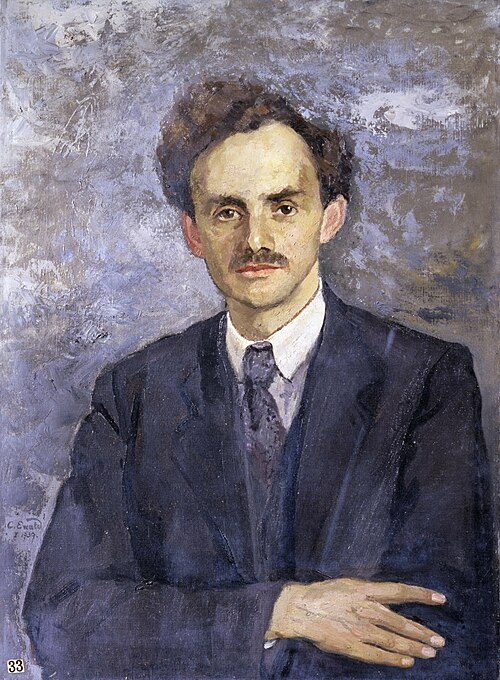
Portrait of Paul Dirac by Clara Ewald, 1939

The 1927 Solvay Conference in Brussels, a gathering of the world's top physicists. Dirac is in the centre of the middle row, seated behind Albert Einstein.