Mathematician
Videos
A mathematician is someone who uses an extensive knowledge of mathematics in their work, typically to solve mathematical problems. Mathematicians are concerned with numbers, data, quantity, structure,

Euclid (holding calipers), Greek mathematician, known as the "Father of Geometry"

Emmy Noether, mathematical theorist and teacher
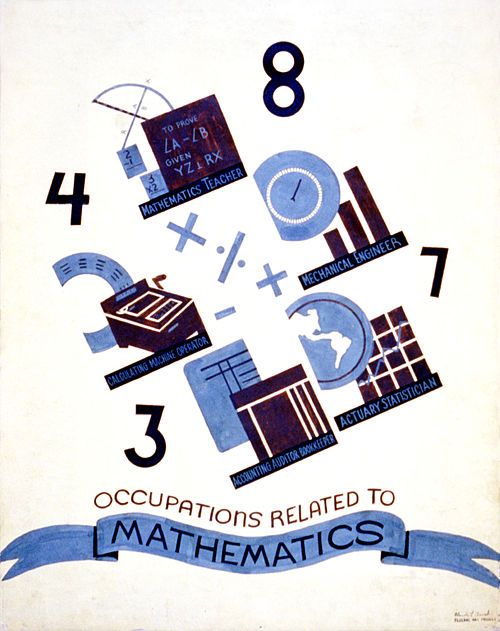
In 1938 in the United States, mathematicians were desired as teachers, calculating machine operators, mechanical engineers, accounting auditor bookkeepers, and actuary statisticians.
Thales of Miletus
Videos
Thales of Miletus was a pre-Socratic Greek philosopher from Miletus in Ionia, Asia Minor. Thales was one of the Seven Sages, founding figures of Ancient Greece.
Mathematician
…problems. Mathematicians are concerned with numbers, data, quantity, structure, space, models, and change. One of the earliest known mathematicians was Thales of Miletus (c. 624 – c. 546 BC); he has been hailed as the first true mathematician and the first known individual to whom a mathematical discovery has been…

Arte romana, testa di talete di mileto, II sec

The Ionic Stoa on the Sacred Way in Miletus.

Thales may have been educated in Egypt.

Thales depicted at the Baths of the Seven Sages.