Maues
Videos
Maues was the first Indo-Scythian king, ruling from 98/85 to 60/57 BCE. He invaded India and established Saka hegemony by conquering Indo-Greek territories.
Maues riding in armour. Like many other Indo-Scythians, Maues did not issue portraits.


Silver tetradrachm of Maues. The obverse shows Zeus standing with a sceptre. The Greek legend reads ΒΑΣΙΛΕΩΣ ΒΑΣΙΛΕΩΝ ΜΕΓΑΛΟΥ ΜΑΥΟΥ (Οf the Great King of Kings Maues). The reverse shows Nike standing, holding a wreath. Kharoshthi legend. Taxila mint.

Coin of Maues depicting Balarama, 1st century BCE. British Museum.

Coin of Machene, Queen of Maues. Obv. Tyche, wearing mural crown. Legend ΒΑΣΙΛΙΣΣΗΣ ΘEOTPOΠOY MAXHNHΣ "Godlike Queen Machene". Rev. Zeus with Nike, legend "Rajatirajasa mahatasa Moasa" in Kharoshthi "Great king of kings, Maues".
Kambojas
Videos
The Kambojas were a southeastern Iranian people who inhabited the northeastern most part of the territory populated by Iranian tribes, which bordered the Indian lands. They only appear in Indo-Aryan i
Maues
…the title of "Great King of Kings", an exceeded version of a traditional Persian royal title. Some scholars have suggested that Maues may have been of Kamboja lineage. Sten Konow, in his edition of the Corpus Inscriptionum Indicarum (1929), interpreted the name Kamuia (found in the Mathura lion capital…
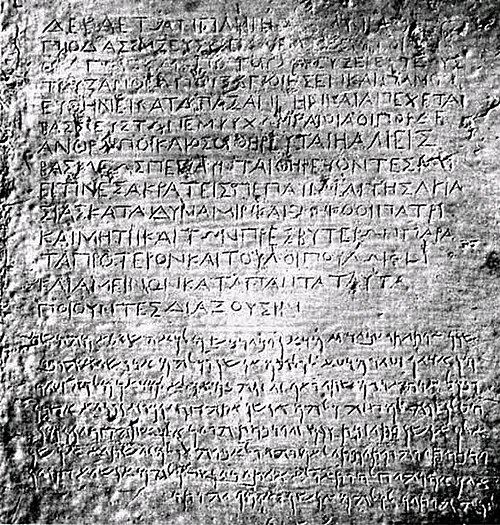
The Kandahar Bilingual Rock Inscription of Ashoka, in which the Kambojas are mentioned.